• Home
  • Products
    • 111 Ways to Save
    • Thrive in Five: Take Charge of Your Finances In 5 Minutes A Day
    • Cash, Credit, and Your Finances: The Teen Years
  • Resources
  • Speaker Info
    • Adult
    • School Age
    • Speaking Engagements
  • About Jill Russo Foster
  • Press/Media Kit
    • Full Media Kit
    • Bio
    • Photos
    • TV Appearances
    • Print Appearances
    • Radio / Podcast Appearances
    • Speaking Engagements
    • Press Releases
  • Contact Jill

Jill Russo Foster

Tips for Successful Personal Finances

  • Events
  • Every Day Finances
    • Banking
    • Budget Planning
    • Family Finances
    • Personal Finance
    • Reducing Expenses
    • Shopping Tips
    • Teenagers and Money
  • Protecting Your Home
    • Disaster Preparedness
    • Energy Efficiency
  • Tax Tips
    • Charitable Giving
  • Manage Your Credit & Identity
    • Debt Management
    • Mortgage Tips
    • Get Great Credit
      • Loans
      • Credit Card Act of 2009
      • Credit Management
      • Credit Report
      • Credit Report Reminder
    • Identity Theft & Fraud
      • Identity Theft
      • Fraud Alert
  • Organization & Planning
    • Organizing Your Space
    • Organizing Your Time
    • Vacation Planning
      • Travel Tips
    • Plan for the Future
      • Financial Goals
      • Marriage and Finances
      • Retirement Planning
You are here: Home / Archives for Organization & Planning

What Can You Do With $20.00

In honor of Money Smart Week, let’s talk about cash. Do you have enough?  Are you living paycheck to paycheck? My philosophy about money is that is comes down to make choices that are right for you at this particular time of you life.  Let’s start with $20.00 cash.  What would you do?

A $20.00 may not seem to be a lot of money, but it can be.  If I gave you $20.00 bill, what would you do with it?

You could:

  1.  Deposit it to your bank account or open a bank account
  2.  Buy something
  3.  Give it to help someone or a charity to help others
  4.  Have fun by brightening your day

I bet you can think of more choices.  Your choices are unlimited.  But instead of think about one thing to do, how about thinking about multiple things to do.  You might be thinking that $20.00 is too little to do anything with, trust me it’s not.

What will $20.00 buy you:

  1.  Movie ticket and possibly popcorn too
  2.  Flowers for you or to give away
  3.  Picnic lunch on a nice spring day
  4.  Pay extra on a bill
  5.  Can of paint to refresh a room

My suggestion is to think about money is multiples.  In this case, it’s not $20.00 maybe it’s 2 $10.00 bills or 4 $5.00 bills.  Now what can you do with that?  Now you can select multiple things on your list.  Your choices are unlimited.  Instead of thinking it’s only $20, think 12 months ahead – that would be $240.  What could you do with that?

Finding extra money (no matter how small) can be put to good use.  The choice is yours – do you use it today or save it for tomorrow?
 

What To Do With All Your Stuff You Don’t Need Anymore?

As you know, we have been cleaning out and organizing a lot of stuff this year.  I am really enjoying Joshua Becker’s book, The Minimalist Home

Here’s some of the things we have done this year and over the last couple:

We took a charcoal drawing my mother did many years ago and had it framed. Now it’s on display in our home, instead of the basement.

We took many books to our local library for their semi annual book sale fundraiser.

We took the old family movies and has them transferred to DVD’s.  We were so impressed that we did this with the slides and old photos to.  Then some of the original photos were donated to the local historical society for them to preserve.  One of the old photos was one that included Phil Rizzuto when he was very young.

We scanned many records and shredded the originals.   I wouldn’t want to lose those records, but I didn’t want to keep all that paper either.

As I have been working on this project weekends, I am always amazed that in our local paper there have been requests.  One week, there was a pop donation site for business attire, so we took over a bag of clothes.  Next, the local high school was collecting formal wear for the upcoming proms.  Another bag of clothes gone.  I really like it when I can donate items that someone else may be able to use.

We’re cleaning out the old electronics too.  We replaced a laptop and tablet late last year.  So it’s time to get rid of.  We sold an old printer on Craig’s List.  We donated a scanner with the help of the Cristina Foundation.  And so much more.

My resources page has lots of suggestions if you are looking to get rid of items.  In addition, here is a couple of great article from the New York Times’ What To Do With All That Stuff (Jan 27, 2019) and How To Sell, Donate and Recycle Your Stuff (Jan 11, 2019).

Digital Clean Out

Another part of my cleaning out, is tackling my digital life.

#1 – I get tons of emails.  Yes, I want to read all of the ones I subscribe to and have the best of intentions, but I don’t have then time.  I have started to go through the ones I really want to read.  I have started to clean out ones that I never signed up for.  I have achieved and deleted thousands.  I don’t want my life to be tied to the computer reading emails. So I have unsubscribed from many. 

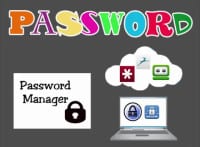
#2 – I have updated my passwords.  When was the last time you changed them?  I make sure to use a different one for each site.  Yes, this can be challenging, but with the help of Last Pass, I can do this fairly easily.  They can tell me if I have a duplicate password and the strength of my choice.  They will even generate ones for me.

#3 – I have started to close accounts that I don’t use anymore.  Like everyone else, I have lots of accounts with my information out there.  I want to minimize this, so I am closing accounts.  For example, I have closed my account with a college text book company.  I finished my degree a couple of years ago and don’t have plans to rent or purchase another text book.  So that account is closed.  Now, more to go.  My theory is the less information I have out there, the less that can be compromised.

#4 – Backing up my stuff.  Many years ago, my office was broken into and my computer was broken into many pieces. Fortunately, I was able to hvae the computer restored and all information was salvageable.  Ever since then I back up my files.  I have a service that does this automatically for me every time my computer is on.  When is the last time you backed up your files?

If you haven’t done this lately, now would be a good time to look your situation.

Cleaning Out

As you know, we have been cleaning out.  So far this year alone, we have made nine bags / boxes of donations – with more to come.  Our library’s book drive is coming up later this month and we have two full boxes of books to donate.

Here is a great article from The Hartford Insurance about decluttering your home when you are downsizing (our in our case just getting rid of stuff).

If you like to donate your items (that are of good quality) and that someone may reuse, think about what organizations in your area are in need of that type of item.  For example, cleaning out your linens closet (towels, sheets, blankets, etc. – think animal organizations).  Most non-profits have a wish list of items they can use in their website.  Don’t forget there are other options, you can sell items and or simple recycle or toss out.  My resources page has some listing of organizations that might help you to get this part of your clean out started.

Do you have any organizations that you think would be a good fit for my resources page, let me know.


What We Spend Money On

Last week I wrote about what we don’t spend money on.  Some of it may have surprise you.  But we don’t live by candle light and never go anywhere.  Today, I’ll share with you what is important to us and what we spend our money on.

Yes, we spend money on food – good food – healthy food – organic, free range, pasture raised food like our parents purchased.  We make most of our foods from scratch and have home cooked meals most nights and bring our lunches to work.  We rarely buy processed and prepared foods.  Once the weather starts to warm up, I start my vegetable garden.  It’s another way to have fresh food at a fraction of the cost. This is where we spend money.  I like to think of this as back to basics.  The same is true for our home.  We clean with home made cleaners, made up of vinegar, baking soda, essential oils and water.

We also travel.  We save most of the year to travel – sometimes local sometimes far.  But we do this on a budget and look for ways to save with deals, points, miles and rewards. We are in the process of planning a trip for 2020 right now. It may seem far away, but to get the lowest prices you sometimes have to plan the travel when it becomes available.  You may be aware of this with airfares that prices go up and up, the same is true for other travel plans.

What do you spend money on?

First Together Then Apart – Now What?

In our last issue, we discussed whether you should blend your finances when you get into a relationship. Money will be your biggest source of friction, and having boundaries doesn’t hurt. I listed some of the different financial relationships couples choose. There are different options besides “What’s mine is mine and never ‘ours’ or “It’s all or nothing or I’m out of here.”

Sometimes your best efforts to create a life together fail, and the relationship ends. Today, we’ll discuss how to unblend your finances. Whether you decided to share all of your accounts, or only share expenses, you should separate your finances as soon as possible, because you can be sure that someone’s name is on the wrong paperwork.

Take a look at your…

  • Rent or Mortgage: Who is on the lease agreement or mortgage? It should be the one who actually lives there. Ignore that piece of wisdom and risk having your home sold out from under you.  Your name shouldn’t be on there if you don’t live there.
  • Utilities, cable, and cell phone: Whose name is on the accounts? They should be in the name of the person using them. If you don’t transfer ownership, you could have your utilities cut off without notice or worse yet – have collection accounts on your credit that you didn’t even know about.
  • Insurance: This includes car, apartment, home, life, and medical. You don’t want to be without insurance, and you don’t want your money going to the wrong person if you don’t update your beneficiaries.
  • Credit cards and loans: Do you want to have your credit affected by charges that aren’t yours, or be forced to make payments on a car you don’t use?

“But Jill,” you say, “these all sound like things that happen in a hostile breakup. We’re not like that.”  Even if your breakup is friendly, and your ex is as trustworthy and competent as a super hero’s alter ego, you still need to separate your accounts to protect yourself in case something happens to one of you. If one of you dies, remarries, or is mentally incapacitated, the law won’t recognize verbal agreements or promises. They only see whose name is on a piece of paper.

Let’s talk about verbal agreements. Let’s say the house and car loan are in your name, but you want to be nice. You don’t need them, and your ex does. Your ex has agreed to make payments, so it’s no big deal, right?

Wrong. Your credit will take a hit with the first missed, or late, payment. And, you may not be able to get a new car or house for yourself because your debt to income ratio is too high. The bank won’t take verbal agreements or divorce decrees with your ex into consideration when you apply for your loan.

Here’s something else to think about: Can you maintain your current lifestyle if you live separately?

If you end up with the house or the car, can you afford the payments? Can you pay for the utilities, the maintenance and the insurance? You may have to make tough decisions, because you could be without the things you need to live if you don’t plan ahead.

Too many people have  found themselves temporarily homeless, or had their credit ruined, or worse bankruptcy after a breakup. Don’t let this happen to you.

Finances and Money

Finance and money is more than paying your bills on time.  Yes, this is extremely important – paying bills late may effect your credit and can cost you money with late fees / finance charges.  But there is more getting your finances organized.  Do you have the money to pay your bills each and every month?  You will want to have money for today and for the future.  Do you have goals you want to achieve?

There are many ways to deal with your finances and money and you have to find the plan that works for you.

The major parts of finances and money:

Determine your goals – what do you want in life?  Maybe a short term goal is having your month last all the way to the end of the month, or to be able to pay all bills in fulls each and every month.  What about long term goals?  How about saving for …. (insert goal such as paying for college, a car, home, vacation) all the way to financial independence.


Action plan – how are you going to achieve your goals?  Break this down into action steps, using the smart goal formula.  What is the first step you need to do to start down this financial road?  Maybe it’s starting to save … (insert amount every pay period).

Budgeting – now’s the time to put your money on the table.  How much money do you need to achieve your goals?  Start by tracking your net income and your expenses (every penny) to see where you stand.  Don’t think your have money to save, then you need to make changes to reduce your expenses and/or increase your income.  Remember that making a budget is not a one time thing, your are making a budget, review and sticking to it.

Savings money – break it down into manageable amounts and be realistic.  Your not going to be able to save $1,000 in a month, but your could start out by planning to save $20 or more per paycheck.  Automating your saving is the easiest and best way to stick with this goal – paying yourself first before you paying anything else.

Paying down debt – we all know that the finance / interest charges are the enemy of your budget.  This is money that could be used in other ways.  Don’t stick you head in the sand, we have all been there at one point or another.  Make a plan to payoff your debt – avalanche or snowball methods are way to start.

Take some time and take a look at your finances and start to deal with your finances and money to get on a path to achieve your goals.

This is very simplified and not all plans work for everyone.  Take the time to modify or find a plan that works for you and your finances.

If you want more information, please visit my website for my upcoming workshops.


Get Organized

January is National Get Organized month.

What are you doing to get yourself and your space organized?

In my book, Thrive In Five:Take Charge of Your Finances In 5 Minutes A Day, January is the month to organize your bills.  Now that the holidays are over, actually open up your bills and look at the bill details, don’t just pay them.  Take the time to review them to see if it’s correct.  Take the time to see if you can do something to save money, Take the time to see what competitors are charging – maybe it’s time to switch or negotiate.  If you want to follow along, my book gives you action steps for each day of the month, so that this isn’t an overwhelming task.

We review our bills in our household each year and it never ceases to amaze me how much we can save.  We stick to my 5 minute a day theme, take an honest look at one bill.  We found that our gasoline credit card bill neglected to give us the $.06/gallon discount.  It’s not much, but it is still our money.  So we made a quick call and got the discount applied.  All this in less than 5 minutes.

And because it’s January and following along with National Get Organized month, we have set up our new filing system for 2019 bills.  Start the filing now as the year begins so that your don’t have paper piling up.  All papers are filed and ready if or when you may need them.

If you want to learn more about taking charge of your finances and would like to purchase a copy of my book, Thrive In Five:Take Charge of Your Finances In 5 Minutes A Day click here.

Starting Off Your Finances For The New Year

Is one of your goals to take control of your finances this year?  Do you want to get control and understand what you have and what you need?  Do you just want to get your finances organized once and for all?  Do you feel there are no more ways to cut your expenses?  Is your goal to save more money for retirement or other goal?  Whatever you want, January is always a good time to start.

If you want to take a quick look and here’s a few tips from Real Simple Magazine – 22 Smart Ideas to Take Control of Your Money.

For a more in depth look, my book Thrive In Five:  Take Control of Your Finances In Five Minutes A Day is a great way to start your finances off with a quick suggestion for each day of the year.  Each chapter is dedicated to one aspect of your finances.  And it even includes catch up days to when there isn’t enough time to squeeze on more thing into your day.  For more information or to purchase your copy, click here.


Happy Holidays!

  • « Previous Page
  • 1
  • …
  • 4
  • 5
  • 6
  • 7
  • 8
  • …
  • 25
  • Next Page »
  • Facebook
  • LinkedIn
  • Pinterest
  • Twitter
  • YouTube

Contact Jill:

Email: jrussofoster@gmail.com or use this form.

Looking for something?

Follow Jill Russo Foster’s board Money on Pinterest.

Copyright © 2026 Jill Russo Foster