• Home
  • Products
    • 111 Ways to Save
    • Thrive in Five: Take Charge of Your Finances In 5 Minutes A Day
    • Cash, Credit, and Your Finances: The Teen Years
  • Resources
  • Speaker Info
    • Adult
    • School Age
    • Speaking Engagements
  • About Jill Russo Foster
  • Press/Media Kit
    • Full Media Kit
    • Bio
    • Photos
    • TV Appearances
    • Print Appearances
    • Radio / Podcast Appearances
    • Speaking Engagements
    • Press Releases
  • Contact Jill

Jill Russo Foster

Tips for Successful Personal Finances

  • Events
  • Every Day Finances
    • Banking
    • Budget Planning
    • Family Finances
    • Personal Finance
    • Reducing Expenses
    • Shopping Tips
    • Teenagers and Money
  • Protecting Your Home
    • Disaster Preparedness
    • Energy Efficiency
  • Tax Tips
    • Charitable Giving
  • Manage Your Credit & Identity
    • Debt Management
    • Mortgage Tips
    • Get Great Credit
      • Loans
      • Credit Card Act of 2009
      • Credit Management
      • Credit Report
      • Credit Report Reminder
    • Identity Theft & Fraud
      • Identity Theft
      • Fraud Alert
  • Organization & Planning
    • Organizing Your Space
    • Organizing Your Time
    • Vacation Planning
      • Travel Tips
    • Plan for the Future
      • Financial Goals
      • Marriage and Finances
      • Retirement Planning
You are here: Home / Archives for Every Day Finances

Beware of Summer “Deals”

Now that summer is here do you find yourself shopping more? It’s the long days and great weather. You feel more energized, more optimistic, and more willing to go somewhere and spend money.

Retailers are counting on your great mood to maximize their bottom lines. They’re using sales to get you into the store and tricks of the trade to get you to buy more products than you had planned.

Let’s look at the grocery store.

You walk in to buy milk and bread, and you walk out with two full bags, having spent way more than you planned.

How did that happen? Let’s look at a common marketing scheme. Most grocery stores have products they call loss leaders. These are often common staples, like milk or bread. They know these bring you into the store, so they’re willing to take a loss knowing that you’ll buy something else that will make up the difference. How can they be so sure? Product placement is a science and could be an article in itself. Just know that you’ll be tempted to open your wallet.

Here’s another common marketing scheme. Most flyers and sales offer a better price for multiple quantities – you were only going to buy one, but then you saw the sticker offering 50% off the second item, so you bought two.  Some grocery stores offer mix and match sales, like 10 for $10 deals in the snacks, frozen food, or canned aisles. The store is obviously trying to get you to buy more than you intended, and because these deals are almost always on foods that will keep, you may feel that it doesn’t hurt to stock up. Does it work for the store? Yes, most people can’t pass up this type of deal.

What can you do about it? You can go to that grocery store, just buy the specific products you need, and leave.

Let’s look at other stores.

“Store Credit” is another trick to get you to spend money. At checkout, you may be offered an additional discount if you use store credit or even free financing for a specific period. They aren’t dong you any favors. They are counting on you having to make multiple payments with interest.

Furniture is a great example of free financing (no payment until 2015). You may be thinking you need a new bed, but with this offer you end up buying the bed with matching night stands and dressers because you have years to pay it off. Of course, the store is betting against you. They don’t believe you’ll actually pay it off on time, then they’ll collect interest going back to the date of purchase.

Let’s go back and take closer look at product placement. It’s not just for grocery stores. It’s no surprise that impulse items are always next to the register. These are small items that are usually reasonable in cost. While you are waiting in line, you find yourself putting one (or more) into your cart.  Maybe it’s the magazine you started to read while you waited, or maybe they have your favorite flavor of gum. These little items add up, leading you to spend more than you intended.

Bottom line: Shop with a plan or list and stick to it.  Don’t be tempted by multiple-item deals and bright displays. One way to stick to your list is to shop with cash. You can’t spend what you don’t bring with you.

Make Your Dream Vacation Affordable

Last issue we talked about vacationing locally and all the things you can do close to home. But, what if you really want to get away? How will you save money, then?

We travel often and are able to save in a variety of ways.  Here are some of them:

  • Travel during shoulder season (that’s somewhere between peak and off-season).  We’re going to Aruba in the Fall. The Caribbean is off season at that time because of the hurricane season, but Aruba is usually too far south to be affected by hurricanes.
  • Comparison shop to get the best deals – there are so many websites that will do this for you. I like Kayak for airfares.
  • Reward Programs – if you find yourself using a particular airline or hotel, join their program. I know you’ve heard that you may not be able to use your miles for flights.  I can tell you that I haven’t found that to be an issue. You do need to plan ahead to get the reward you want. We have used airline miles for many trips, including a flight to Alaska in August.
  • For rental cars, we make our reservation early, but don’t prepay. Then we check back regularly to see if the price has dropped.  You will be amazed at how much the price can drop closer to your trip!
  • Discounts and coupons – don’t forget about those.  We recently went to an aquarium because our water company sent a buy-one-get-one-free coupon with your bill. Coupons and offers can come from a variety of sources. If you have a membership with a service like AAA or a store like Costco, check their mailings or website. Once you reach your travel destination, the visitors guides typically have clip-out coupons (make sure you pick them up when you arrive).
  • Stay at a place with a kitchen (or at least a fridge) to help your budget.  You can shop when you get there for meals and snacks.
  • Bring your own food on the airplane. Take carry-on food versus buying in the airport or on the plane. You can’t bring drinks, but you can buy a beverage in the waiting area, or get a free drink after boarding. Your own food will undoubtedly be healthier and more satisfying than anything they have to offer.

We’ve had trips in the past where we’ve traveled for next to nothing. Our airfare was paid for with miles and our lodging with hotel points. We only had to pay for food, local transportation, and entertainment.

What do you do to save money on vacation?  Join the discussion.

Save Money – Stay Local this Summer

tourists in our own town

Share Your Vacation Story!

Planning a great money-saving vacation? Share your tips! You can post your story in the comments below or on Facebook, LinkedIn or Twitter. Or, you can email me at book @ jillrussofoster.com. I can’t wait to be inspired by your summer plans!

Here are my suggestions!

Now that it’s Spring, you’re probably thinking about summer travel plans. I know I am. But, with the price of gas going up, you might be thinking, “Can I afford to do something this summer?” You can if you stay local. Here are some free or low-cost suggestions:

Local museums – Museums can be pricey, especially if you’re bringing the whole family. But most museums have free days or discount days. Check the website or call the museum to see when their next discount day is, then plan a vacation day around that.

City parks for movies, concerts, or theater – Many Parks and Recreation Departments host events. These might be free, or low cost, and all you need to do is pack a picnic. In our area, we have movies in the park, many music concerts and Shakespeare on the Sound.  Check out your town’s website to see what they offer.

Libraries – Check your library’s event listings (we use our library all year long). Many libraries host interesting talks, movies, and even musical events.

Holiday Celebrations including parades and fireworks – What is your town doing?  Check out nearby towns, too.

State Parks – You’ll get a change of scenery and a day outside.

Tourist activities – Be a tourist or visitor in your town (or nearby) and check out the sites. Try to see your town with new eyes and check out the funny little restaurants, art stores, outdoor art, and important town landmarks.

Get together with family and friends – Plan a get together to reconnect. We have one planned for July already.

Go to the Beach – This is one of my favorite places to relax.

Street Fairs and Festivals – Many areas have multiple festivals throughout the summer. There are arts and crafts fairs, ethnic celebration festivals, and antique car shows. You can buy pottery one weekend, and dance the polka the next. Use the internet to see what’s happening in your area.

What do you have planned?  Join the discussion.

What Don’t You Do with Your Money?

choices

I’ve shared two ways we save money in our household – careful food shopping and credit monitoring. Now I’ll tell you what we don’t do that saves us money.

We don’t have a data plan with our cell service

We have cell phones, but that’s it – just cell phones. We don’t have text messaging or a data plan. We lowered our minutes to the lowest plan available and we regularly come in way below our limit.

We don’t have HBO.

Only in the last month have we upgraded to an HDTV and that’s because one of our two TV’s needed to be replaced. We still have one older TV and we don’t plan on replacing it unless it stops working. We have a basic cable package and get our movies free – either from the library or the free on-demand selection our cable company provides. We gave up our paid movie channels a while back. We don’t have a DVR either – still using the VCR.

We don’t hire home contractors (often).

We do a lot of home maintenance and repairs ourselves. Last year, we painted the garage. This year we painted the bathrooms ourselves. We don’t have a landscaping service to take care of our yard. (It helps that we don’t have a big yard to take care of.) I really enjoy gardening. There is nothing better than picking fresh vegetables and eating them within minutes while they’re still super fresh.

We don’t buy new cars.

We drive older cars. Mine is a 1995 with 167,000 miles and it runs fine. I just had a tune up and the mechanic says the car is in great shape. Having older cars works perfectly for us, because we don’t like making payments. I’m not into fancy cars – all I need is reliable transportation.

You might be thinking that we lead lives of deprivation, but I can assure you that we are not missing out on anything. We only spend money on things that are important to us. If we spent money on things that we didn’t enjoy (but made us look good to other people), that would mean having less money for things we do enjoy – like nice vacations.

What don’t you do with your money? Join the discussion.

If you’re in a relationship, how do you handle finances as a couple?

Broken HeartAre you in a relationship? If you are, you know what it’s like to share your life with someone you love: your joys, your sorrows… and your money.

One of the biggest reasons for divorce (or breakups)  is finances.  I know you don’t want that to happen, so what can you do about it?  Talk. Communication is the key to handling joint finances.

People have different ways of handling their finances.  One person might be a saver who really values the money saved for future dreams and needs, while the other might be a spender who lives in the moment.  If these two individuals become a couple, there can be disagreements about money that can escalate to divorce.

Take a minute to talk with each other about your money habits. It can be a really eye opening conversation.  Really listen and try to understand the other person’s point of view. What did they learn about money growing up? What do they want right now? Where do they want to be in 1, 5, 10 years and beyond?   With this understanding, you can choose a path that will work for the both of you.  Meaning, the spender will save a portion and the saver will spend some money.   Come up with mutual goals and agree on how you will achieve them together.

The goal is to handle your household finances and your goals in a blended way so that both people are comfortable.  To do this, communication and action is key so that all feelings are heard and considered.

If you’re in a relationship, tell me how you handle your finances as a couple. Who handles the money? Who makes the budget? Who sets the goals?

How do you save money at the pump?

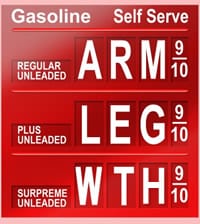
With the price of gasoline going up every time you drive by the station, what are you to do?  There are a couple of things you can do to save money at the pump.

1. Clean out your car.  The more weight you carry in your car, the more gas you use.  Take out the stuff you don’t need and make a habit of doing this regularly.

2. Combine your shopping.  Run errands in one trip versus going out today for something, then again tomorrow for something else.  Map out your stops to get your errands done in an efficient manner.

3. Drive at a steady pace.  Quick starts and hard braking can use more gas than driving at a steady pace.  While you’re at it slow down.  Driving above the speed limit is a waste of gas.

4. Pay with cash.  Many gas stations charge a premium to use your credit card at the pump.  Save money by using cash for your fill ups.

5. Plan ahead.  Use your computer to help you save money when you need to purchase gas.  Websites like Gas Buddy  can find you a lower price and apps like Cheap Gas  can do the same from your smart phone. (Gas Buddy also has an app for Android)

So, how do you save money at the pump? Let me know in the comments.

How Do You Save Money on Groceries?

Food Prices
With Financial Literacy month starting on Sunday, I want to help you to save more money. I figure that the best way to do that is by consulting the experts, and by experts I mean you. I know you have some tried and true money savings tips! As they say, “Only the foolish learn from experience – the wise learn from the experience of others.”

I love picking up tips from other people. This April, I want you to show off your savings expertise. Watch Facebook, LinkedIn or Twitter. I’ll be giving you different savings topics throughout the month and asking for your advice.

The first topic is food shopping. How do you save money on groceries? I’ll start the conversation by telling you how I do it.

  • On Sunday, I sit down and make a list of what we need during the week. That includes a meal plan.
  • When I plan my meals, I make sure that I plan some leftovers so I don’t have to cook every night. Sometimes, I even cook ahead on the weekends and freeze the extra food.  (Ordering take-out can be a downfall to my budget.)
  • My meal planning also revolves around sales. That’s why I like doing meal planning on the weekend with the Sunday paper in front of me.
  • Speaking of the Sunday paper… Yes, I do use coupons.  I don’t make myself crazy.  I cut them out of the weekend fliers and sometimes will even go to the manufacturer’s website to download them.
  • Then, I calculate how much my plan will cost me. I compare my cost to my budget and make adjustments to my food plan if it looks too pricey.
  • Finally, I shop for food with cash.  This stops me from over-spending. If I use my debit card, I find myself adding items to the cart that I hadn’t planned on buying.

What do you do to save money when you food shop?  Join the discussion.

Remember to follow us on Facebook, LinkedIn and Twitter to answer this and other questions throughout the month of April.  You could literally save someone else’s bacon, and learn some new tricks yourself!

Balance Debt Repayment with Savings

I get asked all the time for advice on credit card debt.  We all know that credit card debt is the enemy of a monthly budget. Your money has better things to do than paying down finance charges and interest.  But, if you are currently in debt, then you need to do something about it.

Most of my clients want to know the best way to pay off their credit card debt. Most people ask me if they should put all their resources into debt repayment. My answer to that is “no”. There is one thing that I believe everyone should do while paying off credit card debt – build an emergency savings fund.

You are probably saying that you have no money to save! I’m telling you that you need to find the funds.  Your credit card debt may seem like your biggest priority, but if you take all your extra money to pay down debt, then you will find yourself running up credit card debt any time an unbudgeted expense pops up. These unexpected budget breakers are such regular events that we should learn to expect them. Your car breaks will need to be replaced, an appliance will need a new part, the roof will need new shingles. It’s inevitable. I could go on, but you get the idea.

You need to find a balance in your budget with savings on one side and debt repayment on the other.

The easiest way to build an emergency savings account

Each pay period you should have some money automatically transferred from your paycheck to a savings account. Start out with a small amount on a regular basis. That way you won’t feel the pinch and you will be setting aside money to use when something unexpected happens so you won’t have to use your credit cards.

A good way to pay off debt

To pay down your credit card debt:

  1. Make a detailed list of each credit card, the amount owed, the credit limit, the interest rate(s) and minimum payment amounts
  2. Look at your options – can you transfer the highest interest rate debt to a lower interest credit card (maybe you have room on a credit card you already have)?
  3. If you are considering opening up another credit card, please think before doing so. There a number of factors that are involved here .  Check my website www.JillRussoFoster.com for the five factors that make up your credit score.

On Monday, I will talk about paying down your debt.

Less Junk Mail Equals Less Spending?

Having trouble controlling your spending?  Try something new – control your mail!

You heard me. Control your mail. For the past five years, I have worked extremely hard to get off advertisement mailing lists. My mailbox is no longer stuffed with unwanted fliers and catalogs. Oh, I still get catalogs and fliers, but only from my favorite stores. And, I have asked each of my favorites not to share, rent, sell or do anything else with my contact information. Thanks to privacy laws, I can completely trust all of them to keep my personal information to themselves.

This has reduced my mail considerably.

You are probably wondering, “What’s the connection here? I thought you were talking about controlling spending not junk mail.” Easy. What I don’t see won’t tempt me.  No more impulse buying because a slick ad has convinced me I need it. If I didn’t know I needed it before, then I will probably live without it. And if I do need it, I won’t need a glossy image to sell me on it.

I don’t think I’m weak minded. These ads are designed to make you hunger for the kind of ideal life that only an expensive food-processor can give you. If you’re like me, you’ve spent many a weekend morning browsing through Sunday fliers, lusting after small appliances and “just in time for spring” capris.

Now, I have less mail to go through and more money saved. This is a bonus for my time and my budget.  Try it yourself. You won’t believe how much less spending you have to list on your budget tracker with this little step.

How did I do it? By contacting these companies:

  • Direct Marketing Association, Mail Preference Service, P O Box 9008, Farmingdale, NY  11735
  • Mail Preference Service, Preference Service Manager, Direct Marketing Association, P O Box 3079, Grand Central Station, NY  10163
  • Companies that I receive subscriptions from (example – magazine subscriptions)
  • Store credit card companies and banks – request not to receive offers from them or their partners
  • www.OptOutPrescreen.com or 1–888–567–8688 to limit the offers you receive for pre-approved credit cards

That’s all you have to do! Yes, it takes some work, but it will pay off in the long run. You don’t have to tackle this every day or even during precious relaxation time.

What I did, was set aside the junk mail and take it with me for those annoying “hurry up to wait” appointments. Then I would make the phone calls from my cell. You know, when you’re sitting in the doctor’s exam room for 20 minutes waiting for a physical. Or when you have to leave early to meet someone across town “in case of traffic” then end up sitting in the parking lot waiting for the other person to show up. If you do it that way, you’ll be regaining time, not just saving time.

You may have a savings bond and not know it

Savings BondHave you ever received a savings bond as a gift? In my family, that was what you received as a gift for most birthdays and holidays. My parents always gave savings bonds even to their grandchildren. It was a big thing in my family.

The US Treasury began issuing saving bonds back in the 30’s.  Now, many of those bonds have stopped earning interest.  If you remember receiving these as a child, you should locate them and cash them in.  You may have been too young to remember receiving a bond as a gift when you were a child, so check with your parents and family members to see if they remember.

If you have the physical bond(s), you can look up the current value with the serial number.  If you are not sure, you can check if you have a bond by going to Treasury Hunt at https://www.treasurydirect.gov/indiv/tools/tools_treasuryhunt.htm. You will look up bonds by your social security number.  Back in the day when I was younger, my savings bonds were purchased with the purchaser’s social security number, so you may need to know their social security number to check.  You may need several family members to check their social security numbers to check for unclaimed bonds.

For more information, you can contact the US Treasury by calling 800-722-2678 or through the website www.trasurydirect.gov. Also, paper savings bonds will not be issued anymore (as of January 1, 2012).

  • « Previous Page
  • 1
  • …
  • 28
  • 29
  • 30
  • 31
  • 32
  • …
  • 37
  • Next Page »
  • Facebook
  • LinkedIn
  • Pinterest
  • Twitter
  • YouTube

Contact Jill:

Email: jrussofoster@gmail.com or use this form.

Looking for something?

Follow Jill Russo Foster’s board Money on Pinterest.

Copyright © 2026 Jill Russo Foster