• Home
  • Products
    • 111 Ways to Save
    • Thrive in Five: Take Charge of Your Finances In 5 Minutes A Day
    • Cash, Credit, and Your Finances: The Teen Years
  • Resources
  • Speaker Info
    • Adult
    • School Age
    • Speaking Engagements
  • About Jill Russo Foster
  • Press/Media Kit
    • Full Media Kit
    • Bio
    • Photos
    • TV Appearances
    • Print Appearances
    • Radio / Podcast Appearances
    • Speaking Engagements
    • Press Releases
  • Contact Jill

Jill Russo Foster

Tips for Successful Personal Finances

  • Events
  • Every Day Finances
    • Banking
    • Budget Planning
    • Family Finances
    • Personal Finance
    • Reducing Expenses
    • Shopping Tips
    • Teenagers and Money
  • Protecting Your Home
    • Disaster Preparedness
    • Energy Efficiency
  • Tax Tips
    • Charitable Giving
  • Manage Your Credit & Identity
    • Debt Management
    • Mortgage Tips
    • Get Great Credit
      • Loans
      • Credit Card Act of 2009
      • Credit Management
      • Credit Report
      • Credit Report Reminder
    • Identity Theft & Fraud
      • Identity Theft
      • Fraud Alert
  • Organization & Planning
    • Organizing Your Space
    • Organizing Your Time
    • Vacation Planning
      • Travel Tips
    • Plan for the Future
      • Financial Goals
      • Marriage and Finances
      • Retirement Planning
You are here: Home / Archives for Every Day Finances / Personal Finance

Money Lies

What have you been telling yourself?  What lies do you currently believe?  How have they affected your financial choices and behaviors?

Are you interested in making changes? Remember it’s never too late to make changes.

Here are some of the lies I hear:

  • There is no extra money to save for retirement.
  • I’ll start to save tomorrow when I earn more money.
  • I deserve this now, even if I can’t afford it.
  • I bought this at a good price / discount.
  • I am young and don’t need insurance.
  • I got approved for a new account, so my credit can’t be bad.
  • I can spend now because I will have social security for retirement.
  • I’m not planning on buying a home, so it doesn’t matter what my credit score is.

Do these money lies sound familiar?  There all lies that will affect your financial future, but it’s not to late to make changes.

You may be saying, there isn’t extra money to save.  You must make savings a goal and pay yourself first.  Taking any amount to save regularly is the start.  Set up automatic transfers on payday to begin the automated pay yourself first process and you will see your savings build up over time.

I am at a point in my life where I am getting rid of items and living with less.  How much money did I spend on these items that I thought I needed only to find them sitting unused on a shelf? How much clutter do you have?

Insurance is important to have.  If you have a health issue, it may not be too late to get health insurance.  We had a family member who didn’t have insurance and was diagnosed with cancer.  When he needed insurance the most, he didn’t have it, nor was he able to pay the premium because he couldn’t work.

Social Security wasn’t intended to be your sole source of income.  It was designed as a supplement to your pension/ other income.  Look at your social security account and see what your projected amount is.  Can you live off that?

Credit effects so much of your financial life.  Do you own a car?  Maybe you want to change jobs.  Do you want to rent an apartment? All this depends on your credit report and score.

Beliefs can be changed to achieve what you want with your finances.  It just takes a little effort and some change to get going. What can you tell yourself to change your beliefs for the better?

Do You Want To Find Hidden Money?

Yes, please – don’t we all.  I can remember as a kid finding a $5.00 bill on the floor of Radio City Music Hall and I was thrilled. That’s not what we are talking about today.

How can you find hidden funds in your budget?  Here are some of the ways that we have reduced or eliminated expenses to find money without any struggle:

  • Do you have subscriptions and/or memberships that you don’t use?  Cancelling those things and put more money in your pocket.
  • Shop with a plan.  We make a list of meals for the week and then look at what we have in the house then make the grocery list for shopping.  Without it, we would be making duplicate purchases and spending more money at the store.
  • Do emails make you shop?  Unsubscribe from temptation.  If you didn’t need the item before you opened the email, you probably don’t need to spend money on the item.  If you can’t unsubscribe, then consider having those emails come to a different email that you only check when you need an item.  Don’t be tempted to shop because of an email sale or daily deal.
  • Are you paying bank fees?  Stop! We have several bank accounts and don’t pay and monthly fees for any of our accounts.  Find out what you need to do to avoid the fees associated with your account.
  • You’ve heard this before, bring your beverage, lunch and snacks with you from home.  A coffee for $3.00, a snack for $2.00 and lunch for $10.00 is $15.00 a day or $75.00 a week and $3,750 a year.  What else could you do with that savings?
  • Use your rewards points / rewards for items.  We have a credit card without an annual fee, that gives us points for using.  When it comes to our holiday shopping, we are able to use point for gift cards and this reduces our holiday shopping budget.
  • Do you know your discounts and use them?  What benefits does your company offer it’s employees?  Take advantage of these savings opportunities.  We get a discount on our monthly cell phone bills just for showing a paystub once a year.  Our bank debit card offers us savings offers.  We review the website and when we make the purchase then a percentage of the sale is deposited back to our checking account.

For more savings tips, pick up a copy of my books 111 Ways To Save.

Things To Do Before You Retire

Whether you are just starting out or nearing retirement, there are things you can do now to make retirement easier for you.  You don’t want to retire and not have the money to do what you want.  Here are some things you should think about:


  • Do you have enough in your emergency fund? This past year many people were laid off, furloughed and/or unemployed.  An emergency fund helped many get by.  These funds will help you with an unexpected need for funds i.e. fridge dies and needs to be replaced, your car breaks down and you need to rent a replacement car, etc.  Life happens whether or not you have the funds.  Create or increase your emergency fund to cover 6 to 12 months of your expenses.
  • Have you maxed out your retirement contributions? You may want to fund your retirement accounts both through your employer (401K, 403B, 457, etc.) and your personal (IRA and Roth) accounts.  You can never have too much money for retirement.
  • Is your budget balanced? One of the biggest mistakes you can make is to have more expenses than income.  If this is the case, you will be accumulating debt and therefore not savings money.  Eventually, this could snowball and you will be a slave to your debt.   Make changes now to live within your means.
  • Is your debt paid off in full? Just like living within your means, having your debt paid off in full is important.  When you retire, you will be living on less income.  Having debt paid off will help you living within your means.  Make a plan to have your debt paid off.

According to AARP, more than half of the full-time workers age 50 years and above will lose their job involuntarily.  Keep track of your finances, live below your means and be prepared for whatever comes your way.

Who handles the finances in your relationship?

I met a woman who asked me some questions when she found out what I do for a living.  This subject is one that all of you should be aware of and in honor of Valentine’s Day, I wanted to discuss joint finances.  You wouldn’t believe how many people this affects.

Are you married or in a relationship with joint finances? Even when couples share accounts, living space, or property, it’s typically one person who handles the finanlove and moneyces in a relationship – paying the bills, savings, investing, etc.  But the other person shouldn’t be left in the dark.  Think about your future, I have meet many who have no clue on how their finances are handled and then something happens and they now have to take charge.

Because this is your joint future, both should know what is going on and how to access the information at any time. The definition of the word joint is defined by Merriman-Webster as “united, joined, or sharing with others”.

Both of you should be making decisions together, understanding where you are today with your money and where you want to go for the future. You should both know the names of your banks and investments and how to access these accounts, especially if you use online accounts.  Think of it this way, if the person handling the finances is not able to do it – what would happen?  Could you put food on the table?  Would the utilities be paid to be kept on?

Remember, too, that your children can see how the money is handled in your relationship. What you do, and don’t do, shows them just as much as what you tell them.

I also believe that each person needs to establish credit in their own name and if you are listed as a co-owner on the assets you should also be listed as a co-owner on the liabilities. What that means is that if you own a home (your name is on the deed) you should also be on the mortgage.

Many partners are left out of the finances.  If that’s you, and something happens to the person who handles everything, you are going to have a difficult time.  You may find that the bank accounts that you thought were joint are not.  You may find that you thought you owned the home you live in, but you don’t.  You may find that you need to open a credit card or take out a loan and you have no credit in your name.

All this happens more times than I can count.  If this describes you, then you need to have a conversation today with your partner. You need to what know what assets you have, what liabilities you owe and have a plan for moving forward to achieve your goals.  The first step is having this conversation.

My Top 5 List

I want to share with you my top 5 list of what we have done with our finances over the years that have taken us from being in debt to having a safety net for our finances.

  1. We automatically save from each and every paycheck. When we receive a deposit, there is an automatic transfer of funds from our checking to our savings.  By doing this, we have built up an emergency savings account.  Something we all need.
  2. Taking our large annual bills and dividing them by 12. Then saving that amount monthly.  That way when a large bill is due, we are able to pay it in full without any scrambling or stress.  For example, our car insurance is about $900. annually.  That means we save $75 monthly to be able to make the payment.  All we must do is to plan for the increase in premium to make the payment in full each year.
  3. Earning interest on our bank accounts (yes, even our checking account) and not paying any fees to have the bank accounts.
  4. Maxing out our retirement contributions to our IRA’s accounts each year to have a nest egg for retirement. In addition, we contribute to our 401K / 403B retirement accounts.  You can never have too much saved for retirement.
  5. Contributing to a Health Savings Account (or a Flex Savings Account) to cover our medical costs that insurance does not cover.

I wrote this so that you can know what is possible.  Start today and make changes so that you can achieve your goals.  For us, this was not something that we did overnight, it took many years of making small changes to get to where we are now.

Your Financial Health

Do you ever wonder how your financial pictures stacks up?  Are you on track to meet your goals?  What do you need to still do?  These and other questions are always on the many people’s minds.

I have discussed the importance of having an emergency savings, a budget to know where your money is going, great credit /score to have the best interest rates when you need to borrow and minimal high interest debt.  Check out some of my past emails for more information on these topics.

This is a great article Six Numbers Reveal the State of Your Financial Health. How well do your finances compare to these six areas?  All are important areas that should be goals for you to accomplish with your finances.

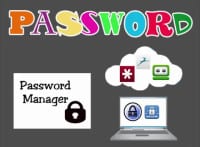
Unique Passwords – Do You Use Them?

How to use a unique password for every account without going crazy

In honor on Cyber Security Month, I am rerunning this newsletter to help you access your accounts safely.  You know you should have completely unique passwords for every online account, and you’re not supposed to write them down anywhere. But that’s not enough. They also have to be hard to remember.

If you’re like me, that’s just not possible because you use a lot of online services. The internet has made my life easier in so many ways, but it comes with its own risks.

So, how do you keep your online accounts safe? Many people are turning to Password Managers.

A password manager is software that stores and organizes your passwords in an encrypted state, which makes them hard to hack.

The most popular versions will fill login forms automatically. Once you’ve downloaded the software and stored your passwords, they’re fairly easy to use.

Are they safe? The experts are mixed on this point. Some feel that it’s never safe to store your passwords. Others are comfortable with the encryption used on the best versions.

My assistant swears by LastPass. It’s free for your PC, but the is a cost for using it on your smartphone.

If you want to use a password manager, you can choose between a web-based or a local service. LastPass is web-based as is Dashlane and Roboform. The information is stored in the cloud so you can easily use it on all your computers and devices. Keepass and SplashID are local, meaning they’re stored on your PC.

To do your own research, check out the links below.

If you use a manual system, remember to use unique passwords for each site.  When was the last time you changed your passwords?  One of the most common passwords in the actual word “password”.  Not a good choice.  Be creative and make something you can remember that isn’t public information (mother’s maiden name, pet’s name, etc.).

Two factor identification is another great way to keep your accounts safe.  You’ll receive a text or email with a code, that you have to enter so that you can prove you are you.  Yes, it can be an added step that takes time, but it can save you in the long run.

How do you manage your passwords? Let me know in the comments.

Fourth Quarter To Do’s

Can you believe it, it’s fall and the year end is in sight!choices

For me, there is lots to do (and I am not thinking the holidays yet).

This time of year means it’s time to review my health insurance choices.  Open enrollment for health insurance is here (or just a week or so away).  Medicare is already in the open period, the state of CT will open up the 1st of November and many company plans have the open enrollment at this point too.  It’s time to reevaluate and determine if I want to stay on the same healthcare plan or make a change.

If you have a FSA (Flexible Spending Account), start to look at the balance and determine how to use the funds.  This is a use it or lose it type of account. You wouldn’t want to lose money, would you? If you have an HSA (Health Savings Account), have you maximized your contributions for 2020?  This can be a great way to lower your taxable income.  Make sure you pay all your eligible medical expenses with this account.

Take the time now to do your research and make the choices that are right for you and your family now.

Tackling Your Debt – Part 2

In the last issue we talked about paying off your debt with some methods that you could do on your own.  Let’s talk bout other options to payoff your debt, that you will need to consult a professional and make some tough choices before moving forward.

A Home Equity Line of Credit or Home Equity Loan: this is a mortgage against the equity in your home.  This is similar to debt consolidation except for using your home as collateral.  While this can be a much lower interest rate (and may be tax deductible), you are taking possibly unsecured debt and securing it with your home.  In addition, there may be closing costs, attorney fees, etc. involved with the mortgage process. And if you cannot make the monthly payment, there can be substantial consequences involved up to and including the loss of your home.

Debt Settlement sound like a great option to settle your debt for a lesser amount.  You would be paying a smaller agreed upon amount to pay off your debt.  While it sounds good, first do you have the cash to do this?  Second, there could be tax implications on the amount you save (the IRS can consider this taxable income).  In addition, this will be a negative factor on your credit report / score.

Bankruptcy, this is typically the last resort.  The is a legal / financial decision that you will need to discuss with your professionals (lawyer, tac preparer, etc.) before moving forward. There are two types of bankruptcy. One you will enter a payment plan to payoff your debt for a fixed period of time.  The other option, you will eliminate your debt entirely.  But you need to think about what is involved in the big picture – your will have legal fees that will need to be paid, your credit will most certainly be affected, and your will have difficulty receiving new credit at a reasonable interest rate for a period of time.  You will be able to get credit but at a much higher interest rate initially. Until your credit is reestablished.

One tool that I find useful is a financial calculator and BankRate.com is one of my favorite websites that offer a variety of calculators to help you make a decision that is right for you. https://www.bankrate.com/calculators/index-of-credit-card-calculators.aspx

Now that you have several options, make the choice that is right for you and your situation.  Talk to your professionals to get their option.  Then consider the benefits and costs involved.  These are not easy choices, but one that you need to make if you have substantial debt that you want to payoff once and for all.

Tackling Your Debt – Part 1

Now if you are someone who has accumulated debt in 2020 (or previously), lets talk about ways to payoff your debt.  You have heard the ads on the radio and see the commercials on TV, but are they legit? Maybe, but do you want to try and find out you have been scammed?

Here are some of the ways that you can payoff your debt by yourself:

There is the snowball way:  Here is an example:  you have a $500 medical bill, a $2,000 credit card balance and a $10,000 car loan.  You would make the minimum payments to the credit card balance and the monthly payment to the car loan, while paying as much as you can to the medical debt.  Once the medical debt is paid off, you would start to pay off the credit card debt.  You payoff your debt by paying the smallest balance first and moving to the next smallest debt and so on.

The avalanche way: In this scenario you will pay the minimum payments to all your debt except the one with the largest balance.  Here is an example:  you have a $7,500 credit card balance on one card, $9,000 on another and $1,000 balance on a personal loan.  With this method, you would pay the minimum amount due each month on the $1,000 loan and the $7,500 credit card.  You would pay as much as you can (more than the minimum due) on the $9,000 credit card to pay this off faster.  Once this is paid off, you would move to the next largest balance and so on.

Debt consolidation is another option:  You would apply for an unsecured loan and consolidate all your debt into one loan and have one monthly payment to deal with.  Depending on what type of debt you are consolidating, you may have a lower interest rate. Typically, this would be lower than credit card rates, but may be higher than student loan debt.   You would need to compare terms and costs to see if this method is right for you.

A Balance Transfer can be an option:  With either your current credit card or opening a new one, you can transfer your debt to this credit card with zero percent interest for a fixed term.  A few cautionary notes: look at what fees might be involved for your situation.  Also, if you chose this option on a credit card that you have a balance on, your payments will be applied to the highest interest balance first.  Meaning you are not paying down the zero percent balance until the higher interest rate balance is paid.  This might take longer than the zero percent offer is good for.  If you do this, plan your payments wisely.  Take the balance and divide it by the number of payments during the zero payment term.  This is the amount you will be nee to be able to pay every month to pay this balance off.  If you fail to payoff the balance during the zero interest period, you will owe the remining balance with the new interest rate back from the date of the transfer.

Next issue, we will discuss other options that are available, that you will need to think about before moving forward.  Remember that debt is your financial enemy, so make a plan to tackle your debt now rather than later.

You will need to check with the appropriate professionals to discuss the pluses and minuses of each option before you make a choice.

  • « Previous Page
  • 1
  • 2
  • 3
  • 4
  • 5
  • …
  • 12
  • Next Page »
  • Facebook
  • LinkedIn
  • Pinterest
  • Twitter
  • YouTube

Contact Jill:

Email: jrussofoster@gmail.com or use this form.

Looking for something?

Follow Jill Russo Foster’s board Money on Pinterest.

Copyright © 2025 Jill Russo Foster