
• Home
  • Products
    • 111 Ways to Save
    • Thrive in Five: Take Charge of Your Finances In 5 Minutes A Day
    • Cash, Credit, and Your Finances: The Teen Years
  • Resources
  • Speaker Info
    • Adult
    • School Age
    • Speaking Engagements
  • About Jill Russo Foster
  • Press/Media Kit
    • Full Media Kit
    • Bio
    • Photos
    • TV Appearances
    • Print Appearances
    • Radio / Podcast Appearances
    • Speaking Engagements
    • Press Releases
  • Contact Jill

Jill Russo Foster

Tips for Successful Personal Finances

  • Events
  • Every Day Finances
    • Banking
    • Budget Planning
    • Family Finances
    • Personal Finance
    • Reducing Expenses
    • Shopping Tips
    • Teenagers and Money
  • Protecting Your Home
    • Disaster Preparedness
    • Energy Efficiency
  • Tax Tips
    • Charitable Giving
  • Manage Your Credit & Identity
    • Debt Management
    • Mortgage Tips
    • Get Great Credit
      • Loans
      • Credit Card Act of 2009
      • Credit Management
      • Credit Report
      • Credit Report Reminder
    • Identity Theft & Fraud
      • Identity Theft
      • Fraud Alert
  • Organization & Planning
    • Organizing Your Space
    • Organizing Your Time
    • Vacation Planning
      • Travel Tips
    • Plan for the Future
      • Financial Goals
      • Marriage and Finances
      • Retirement Planning
You are here: Home / Archives for Every Day Finances

Tackling Your Debt – Part 1

Now if you are someone who has accumulated debt in 2020 (or previously), lets talk about ways to payoff your debt.  You have heard the ads on the radio and see the commercials on TV, but are they legit? Maybe, but do you want to try and find out you have been scammed?

Here are some of the ways that you can payoff your debt by yourself:

There is the snowball way:  Here is an example:  you have a $500 medical bill, a $2,000 credit card balance and a $10,000 car loan.  You would make the minimum payments to the credit card balance and the monthly payment to the car loan, while paying as much as you can to the medical debt.  Once the medical debt is paid off, you would start to pay off the credit card debt.  You payoff your debt by paying the smallest balance first and moving to the next smallest debt and so on.

The avalanche way: In this scenario you will pay the minimum payments to all your debt except the one with the largest balance.  Here is an example:  you have a $7,500 credit card balance on one card, $9,000 on another and $1,000 balance on a personal loan.  With this method, you would pay the minimum amount due each month on the $1,000 loan and the $7,500 credit card.  You would pay as much as you can (more than the minimum due) on the $9,000 credit card to pay this off faster.  Once this is paid off, you would move to the next largest balance and so on.

Debt consolidation is another option:  You would apply for an unsecured loan and consolidate all your debt into one loan and have one monthly payment to deal with.  Depending on what type of debt you are consolidating, you may have a lower interest rate. Typically, this would be lower than credit card rates, but may be higher than student loan debt.   You would need to compare terms and costs to see if this method is right for you.

A Balance Transfer can be an option:  With either your current credit card or opening a new one, you can transfer your debt to this credit card with zero percent interest for a fixed term.  A few cautionary notes: look at what fees might be involved for your situation.  Also, if you chose this option on a credit card that you have a balance on, your payments will be applied to the highest interest balance first.  Meaning you are not paying down the zero percent balance until the higher interest rate balance is paid.  This might take longer than the zero percent offer is good for.  If you do this, plan your payments wisely.  Take the balance and divide it by the number of payments during the zero payment term.  This is the amount you will be nee to be able to pay every month to pay this balance off.  If you fail to payoff the balance during the zero interest period, you will owe the remining balance with the new interest rate back from the date of the transfer.

Next issue, we will discuss other options that are available, that you will need to think about before moving forward.  Remember that debt is your financial enemy, so make a plan to tackle your debt now rather than later.

You will need to check with the appropriate professionals to discuss the pluses and minuses of each option before you make a choice.

2020 A Year For The Records Books – Part 2

This is part 2 of 2020 A Year For the Record Books – click the link to read part 1.

We must learn to adapt our finances to changing times.If you live in the tri-state areas, we had a hurricane Esaias.  Many people had damage to their homes / property and lost power for days.  Having to replace all the food in your fridge and freezer is a huge expense, that you probably weren’t expecting.  Look into reimbursement from your renter’s / homeowner’s insurance (and possibly the power company) to ease your budget.
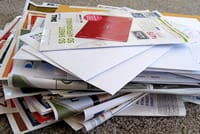

Spending more than you have. With more time at home and less going out, did you find yourself spending more online than your budget allows?  Just because something is a good deal, doesn’t mean you need to purchase it.  As they say, you don’t need to keep you with the Jones’s.

Credit card debt.  You know that debt is the enemy of your budget, so carry a balance month to month on your credit card in not good. Yes, I know that right now creditors are working with you if you are having trouble payment your debt.   But think long term, what is it costing you?  Make a plan to payoff your debt in full each and every month, so this won’t be an issue with your finances.

With the holidays just around the corner, that will be another big expense for many.  Think about what your plans are and how they may need to be adapted to fit your finances.  Another words, don’t overdue it.  Now is the time to make a plan and stick to it.

Now that I have shared with you some of the ways you might be accumulating debt, what are you planning on doing (or have done) to stop debt from accumulating?

2020 A Year For The Records Books – Part 1

2020 has been a year unlike any other – from job loss / furloughs to pandemics to hurricanes.  All of this has signaled changes in our lives, not only in what we do (or don’t do), how we live and how it affects our finances.  We must learn to adapt our finances to changing times.

For many this is a year that you started (or continue) to accumulate debt.  Not a good thing!

Let’s first talk about all the ways that you may be accumulating debt:

Not having an emergency fund.  You have heard me preach over the years about having a savings account for life’s what ifs.  This was the year that many of us needed to fall back on our emergency savings as jobs were lost / furloughed and the unemployment system was overwhelmed, and payment were delayed.  Your emergency savings was the way to get you through in these uncertain times.

Adapting to change (the new normal). As your life changes, so should your finances.  Meaning that if you have job loss / less income coming in, you need to tighten your belt and cutback on your expenses.  Answer these two questions.  Think what can I get for free that I have been paying for?  Think what can I reduce or eliminate in my monthly expenses?  Want more information, check out my past newsletter, Budgeting By The Numbers.

Eating out / take out.  Food is one of the biggest expenses in a family’s budget.  Typically, when I coach a family, it the food that is an issue with their spending.  How much is it costing you to eat out, pick up take out, grab a beverage versus bringing and cooking at home?  Track this and see where your family stands.

Reimbursable costs.  In these uncertain times, you may have more medical than other years.  Make sure to utilize all your options such as FSA and HSA accounts, in network providers, etc.  I was speaking with someone who hadn’t submitted any expenses to her FSA account.  She potentially could be leaving a lot of money on the table by not timely submitting her expenses for reimbursement.  

Check out next week’s newsletter for part 2.


Decluttering Your Financial Records

Since we have all been at home for months and doing things around the home, I thought I would rerun this appropriate newsletter about what you need to keep and toss for your financial records.

Here is what you can get rid of:

Paystubs – Do you have a stack of them?  You can get rid of last year’s because you have a W-2 that summarizes what you’ve earned.  Keep the W-2.  Make sure they match before shredding.

Bank Statements – If your bank gives you an annual summary or statement, then you can get rid of all the monthly or quarterly statements, but keep the annual summary / statement.

Tax Returns – Generally, you can get rid of tax returns that are seven years old or more (2013 and older) along with the supporting documentation.  However, you will want to check with your tax preparer if you:

  • bought, sold, and/or own a home
  • hold certain investments
  • received certain gifts
  • have any other special circumstance that requires you to keep related paperwork indefinitely.

In other words, check with your tax preparer before shredding your returns.

An alternative to paper files

Keeping your records on your computer is a great alternative to paper files. We had a lot of paper clutter hanging around, so I started the process of scanning my records as pdfs.  If you need a piece of documentation, it’s much easier to locate and open a single pdf than it is to search through a big, cluttered file full of paper. The best part is, that you don’t have to refile the pdf after you’re done looking at it. It’s also easier to fax or email a pdf if needed. Think of all the times you’ve needed to share information about insurances, taxes or rebates. Computer files are great to work with.  Remember to keep a back up of your files.  You wouldn’t want to lose them if your computer crashes.

Make sure to shred

Remember when I say “get rid of”, I mean for you to shred each and every document that has your personal information on it before throwing it away.  You don’t want to offer dumpster divers an opportunity to steal your identity.

Call your tax preparer to see what you need to keep and start to go through your paperwork to eliminate what you don’t need.  Happy Shredding!

Simplification Month

If you have been following my posts in July, you see what we have done to simplify our lives.  This is always a priority for me.

Did any of tips inspire you to make a change?  What have you done?  What did you do that we haven’t yet?  I am always learning something new from  my readers.

I would love to hear from you.  Tell me what you’ve done.  Tell me what you like to learn more about with your finances.

Simplifying By Making Choices

This stay at home time, we have made changes to our routine.  Bills are still coming in and some are higher, but income stayed the same or was even reduced.  Something had to change.

For our electric bill that went up (even more now with summer air conditioning), we unplugged.  Think shutting the strips on the TV ‘s when not in use, unplugging the computers and printers when not is use, unplugging the kitchen appliances, and more.  By doing this we have reduce our bill by about $15 a month.  AARP has an article on lowering your electric bill during summer.

Previously, we have reduced our cable bill, by reducing it to basic TV service and internet.  Now we add whatever paid service that works for us – and only one at a time.  We have smart TV’s and can access programming through the internet apps that are free.  We use our local library’s digital collection for free.  Right now, we are using Sling TV for other channels.  In total, we spend about $110 a month total, by reducing the cord.  Hopefully, one day we can totally cut the cord!

We have also not renewed most magazine subscriptions and cancelled memberships.  For our warehouse club, I had to go into our profile and uncheck automatic renewal.  If you do this, remember to check that you are not being automatically being changed when you shouldn’t be.

Simplifying Buying When Not Needed

How many times have you gone out and made a purchase only to come home to find out that you already had the item?  This used to be us. 

Simplifying the kitchen is good thing makes what we need easier to locate when needed.  Simplifying and organizing has been our mission.  Now our kitchen cabinets and grouped together – one shelf for condiments, one for soups and other canned goods, one for pastas, etc.  Kitchen cabinets a mess. Items put on any shelf and not grouped together.

Now it’s so much easier to see what is needed before going shopping and not may unnecessary purchases (all while saving money).

Simplifying One Times Use Items

Next, we are simplifying by getting iod of items the are one-time use items.

What items are in our kitchen that we only use for one purpose.  These are taking up space and we can do without these.  Think apple slicer, we can cut the apple with a knife.  Think popsicle molds, how many times have I used them.  I can only think of one time.  We are working our way through the cabinets and drawers in our home.  How many of these items do you have in your home?


Items are piling up and will be ready to donate soon.

Simplification – Duplicates Be Gone

Simplifying the kitchen is good thing and makes what we need easier to locate when needed. spring cleaning

During this stay at home time, we have begun getting rid of duplicates.  Really, how many potato peelers can one kitchen need?  Not to mention the hamburger flippers, ladles and more.

We have begun going through the process of cleaning out the kitchen cabinets and drawers.  I can’t believe how much we have accumulated over the years.  Maybe, its time to pretend we are moving and do a deep cleaning? Think about all the money we have wasted with buying these items!  It’s time to think save money instead of buying another item.

Simplifying By Doing It Ourselves

We have made choices in our lives to do things ourselves and not pay for the service.  It’s a personal choice that we are happy with.

With that in mind, I want to share with you what we personally don’t spend money or reduce our spending on in our household.

Our Home:

  • Yard work
  • Spring and fall yard clean up
  • Snow shoveling
  • Gutter cleaning
  • Power washing
  • Trash / recycle – would have to ay a trash hauler as our town doesn’t provide this service
  • Rain barrel – we collect rain water and use this to water the garden and plants
  • Compost Bin – our town has a goal to go waste free, so we are able to take our food waste to the town for compositing

By doing these things ourselves, we save money each and every month that we can use in a variety of ways (reduce debt, increase savings).

  • « Previous Page
  • 1
  • …
  • 5
  • 6
  • 7
  • 8
  • 9
  • …
  • 37
  • Next Page »
  • Facebook
  • LinkedIn
  • Pinterest
  • Twitter
  • YouTube

Contact Jill:

Email: jrussofoster@gmail.com or use this form.

Looking for something?

Follow Jill Russo Foster’s board Money on Pinterest.

Copyright © 2026 Jill Russo Foster