• Home
  • Products
    • 111 Ways to Save
    • Thrive in Five: Take Charge of Your Finances In 5 Minutes A Day
    • Cash, Credit, and Your Finances: The Teen Years
  • Resources
  • Speaker Info
    • Adult
    • School Age
    • Speaking Engagements
  • About Jill Russo Foster
  • Press/Media Kit
    • Full Media Kit
    • Bio
    • Photos
    • TV Appearances
    • Print Appearances
    • Radio / Podcast Appearances
    • Speaking Engagements
    • Press Releases
  • Contact Jill

Jill Russo Foster

Tips for Successful Personal Finances

  • Events
  • Every Day Finances
    • Banking
    • Budget Planning
    • Family Finances
    • Personal Finance
    • Reducing Expenses
    • Shopping Tips
    • Teenagers and Money
  • Protecting Your Home
    • Disaster Preparedness
    • Energy Efficiency
  • Tax Tips
    • Charitable Giving
  • Manage Your Credit & Identity
    • Debt Management
    • Mortgage Tips
    • Get Great Credit
      • Loans
      • Credit Card Act of 2009
      • Credit Management
      • Credit Report
      • Credit Report Reminder
    • Identity Theft & Fraud
      • Identity Theft
      • Fraud Alert
  • Organization & Planning
    • Organizing Your Space
    • Organizing Your Time
    • Vacation Planning
      • Travel Tips
    • Plan for the Future
      • Financial Goals
      • Marriage and Finances
      • Retirement Planning
You are here: Home / Archives for Jill Russo Foster

How to Prepare for a Weather Disaster

The first four months of this year have provided all sorts of weather challenges all over the country.  We started the year off with record breaking snow storms, in April, there were major tornadoes (over 300 in one day), and now flooding. What is going on with this weather?

Are you prepared for whatever weather disaster comes next? Read and find out!

There is more to worry about than the actual storm. You could experience long term affects like power outages, flooding, wind damage, and more. Don’t assume that you won’t experience a weather disaster just because it has never happened in your area before.

These tips will prepare you for any kind of disaster, so read on.

Do you have proper insurance coverage? When was the last time you discussed your policies or updated them with your insurance company or agent? It could be well worth your time to do this in the next couple of weeks. While you’re there, you should also ask about umbrella coverage if you don’t have it already. As the name implies, this is a general purpose policy which provides additional protection above and beyond your existing policies. It is a relatively low cost insurance that can make a huge difference if you have to file a claim.

Do you have a well thought-out evacuation plan? You can’t use a general plan created by someone else. Personalize yours to fit your needs. Here are some things to consider:

  • Exit Strategy: Make sure everyone knows the quickest way to get out of the house in case of fire or other natural disaster. Seconds really do count!
  • Meeting Place: Have an agreed-upon meeting place. The quicker you can do a headcount, the quicker you can move to locate anyone who didn’t make it out. Have 2 meeting place locations. One right outside your home (sidewalk or driveway) and the other off your property (friend’s house, library, or school).
  • Contact Person: Specify one person to be the call receiver. If your family gets separated, and cannot get to one of those locations, the separated parties should text or call the main contact. This will save confusion and missed calls. Make sure everyone knows the contact person’s phone number or has it stored in their cell phones!

Do You Know How to Prepare for a Storm? Here are a few other general tips for you to think about. If a storm is forecast, make sure you:

  • Have a full tank of gas. Gas stations can’t pump gas if the power is out.
  • Secure your outdoor items so that they will not become airborne and injure you or someone else.
  • Stock your disaster supply kit. In a serious storm, this could be well worth the effort. Include drinking water (at least one gallon of drinking water per person per day), food (canned, dry and other non-perishables which don’t require cooking, water, or special preparation – don’t forget a manual can opener), prescriptions and medications (three day supply recommended), first aid kit, flashlights, battery-powered lanterns, and AM/FM radio plus extra batteries.
  • Prepare a pet supplies bag. Don’t forget your pets! They’ll need food, water, medications, and leashes.

This way you will be ready for whatever weather comes next. Is there something else that you do that I didn’t include? Tell me in the comments section.

Pack Rat Day!

clutterOn Tuesday, May 17, let’s celebrate all those people who have stacks and piles of stuff!
Anita Taylor, Professional Organizer & Speaker, has the following advice for those of us who tend to let things accumulate, especially our important paperwork:

The best way to tackle a stack is to…

  • set a timer for 15 minutes
  • sort from the top
  • use the 3 D Method
  • Do it, Dump it or Delegate it!

Still not done? Read on…

Sort by category: When sorting materials that all belong in the same category designate a “home” for that category for filing or storing later.  This is meant to be a quick sort so you can destroy the stack.

Attack from different angles: The next time you attack that stack, start from the bottom, set the timer and GO!  Next time, top; after that the bottom; and, if there’s anything left on the 5th try, cut the stack like a deck of cards and work from the middle!

Don’t forget:  Set the Timer and STOP when the buzzer rings!

Once you’ve gotten this accomplished, be sure to write and let me know how it went.

The legend of the no-limit credit card

Question: Which financial institution created a credit card based on an urban legend?
(The answer to our trivia question is at the bottom.  But first, let’s talk about your credit cards.)

Are your credit cards right for you? If you’re not sure, here are some key points you can compare to determine which product is right for you.

Is the interest rate fixed or variable?
If you carry a credit card balance, you will want a fixed rate. If you pay in full each month, the rates won’t matter.

Will you use the card for purchases, balance transfers, or cash advances?
Your credit card company will apply a different rate for each transaction, so pick the right card with the right rates for your financial plans.

Is there an annual fee just to have the account?
You may not want an annual fee. However, if the annual fee covers your membership to a discount service or store (like a big box store), you may find that it’s worth it.

Ask about any other costs or fees.
Look for late fees, membership fees, over limit fees, returned payment fees,  etc).

How is the billing cycle calculated?
Does the due date suit your monthly budget? If the card is due on the same date as your mortgage, that could cause trouble.

Your credit cards should work with the way you spend money and pay bills. Don’t let your cards cause you more trouble than convenience.

Trivia Question Answer:
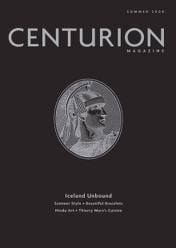
The (virtually) no-limit credit card, the Centurion, was created by American Express for no other reason than the persistent rumors that it actually existed. This card is obviously meant for the rich and famous. For those of us with bigger dreams than budgets, a no-limit card would be a disaster. Fortunately, the Centurion is issued by invitation only.

Quick Tips: Vacation Safely

If you’re going away on vacation, you need to take some steps to protect yourself and your belongings. But, most of us aren’t covering all the bases. Here’s what I suggest you do:

  1. Stop the mail, newspaper, and any other automatic delivery
  2. Make arrangements for pets and plants
  3. Call your credit card companies to let them know where you will be so that they can approve any charges you make and contact you if needed.
  4. Make sure you have paid all your bills ahead of time so that you don’t have a late payment (remember: late payments are the biggest factor of your credit score).
  5. Adjust your thermostat accordingly and unplug any unnecessary electronics. It’s also a good idea to set timers for any lights or electronics you want turned on and off in your absence
  6. Have someone either housesit or check on your house frequently
  7. Clean out your wallet. Remove all items that you won’t be using. This includes local items (like library cards), rewards cards, and any credit cards you won’t need on vacation. You should only carry what you will be using. If you are traveling with a spouse, make sure you travel with different credit cards. If one of you loses a wallet, then the other will still have credit cards that are usable.
  8. If you will be travelling with a passport, make sure to make two copies of the information page, and don’t keep the copy with your passport. Keep one with you in case you lose it and give one to someone you trust who isn’t traveling with you.

What do you do before you go? Let me know your tips.

What to do with all those receipts…

You come home from a long day and your purse or wallet is stuffed with little receipts. They are from the bank, the store, and the dry cleaners. You probably even have your paystub stuffed in there. Do you have a system for dealing with all these little pieces of paper?  If not, now is the time to start.

I personally have different systems for different types of receipts:

Bank, debit card and credit card receipts –  For the most part, these are shredded after they are balanced to my bank statement. In the meantime, I toss them into my little receipt basket. If I ever need to return an item or get a price adjustment for sales items, all my receipts are in one place and easy to find.

Warranty receipts – Receipts for items that have a warranty are stapled into the product manual and filed by category such as “appliances”, “tools”, “technology”, etc.

Gift receipts – I keep gift receipts until I can be sure that the recipient won’t call asking if he or she can exchange my gift. I wait about a month, generally.

Dry cleaning and other delivery/pickup items – These go on my fridge with a magnet as  a reminder to pick up when ready. It also keeps the receipt handy.

Paystubs – I treat these a little differently. They are kept in an accordion file with my tax receipts and filed by category until my W-2 arrives and all paperwork agrees.

Because of the possibility of identity theft, each receipt and the corresponding paperwork is shredded before it’s thrown away.  I never toss any paperwork with account numbers or other personal information and you shouldn’t either.

Decluttering Your Financial Records

Hurray! Tax season is over (unless you filed an extension).

The next step is to get rid of clutter – time to clean out your financial records.

Here’s what you can get rid of:

Paystubs – Do you have a stack of them?  You can get rid of last year’s because you have a W-2 that summarizes what you’ve earned.  Keep the W-2.

Bank Statements – If your bank gives you an annual summary or statement, then you can get rid of all the monthly or quarterly statements.

Tax Returns – Generally, you can get rid of tax returns that are seven years old or more (2003 and older) along with the supporting documentation.  However, you will want to check with your tax preparer if you:

  • bought, sold and/or own a home
  • hold certain investments
  • received certain gifts
  • have any other special circumstance that requires you to keep related paperwork indefinitely.

In other words, check with your tax preparer before throwing away your returns.

An alternative to paper files

Keeping your records on your computer is a great alternative to paper files. We had a lot of paper clutter hanging around, so I started the process of scanning my records as pdfs.  If you need a piece of documentation, it’s much easier to locate and open a single pdf than it is to search through a big, cluttered file full of paper. The best part is, that you don’t have to refile the pdf after you’re done looking at it. It’s also easier to fax or email a pdf if needed. Think of all the times you’ve needed to share information about insurances, taxes or rebates. Computer files are great to work with.

Make sure to shred

Remember when I say “get rid of”, I mean for you to shred each and every document that has your personal information on it before throwing it away.  You don’t want to offer dumpster divers an opportunity to steal your identity.

Call your tax preparer to see what you need to keep, and start to go through your paperwork to eliminate what you don’t need.  Happy Shredding!

What if you owe money on your taxes?

Taxes are due on Monday. Did you owe money this year? I did, and it wasn’t a happy surprise.

It’s fine if you have the money, but what if you don’t have the money to pay by the due date? Let’s look at three possible scenarios:

Failure to File:
The worst thing that you can do is not file your federal taxes at all. Remember, filing isn’t the same as paying. It’s important to file your taxes by the deadline to avoid the penalty. How late you file determines the fine. It can be up to 25%.

You might be afraid to file your taxes if you don’t have the money to pay. After all, that’s admitting you owe a debt. But, you won’t be kidding anyone – trust me.

If you have the money to pay by the deadline, you are all set. If that is not possible, then work out a payment plan to keep the penalty fees as low as possible.

Failure to Pay:
Failure to pay means that you filed your returns on time, but didn’t make the payment in full by the tax deadline. The IRS will add a monthly percentage to what you owe each and every month until the amount is paid in full, but it is substantially better than the first penalty.

Interest:
Lastly, interest is charged on the amount you owe if you don’t pay by the due date. At first, the IRS charges 4% but they increase the interest rate every three months.

Preventing a Big Tax Bill
Have your tax preparer look at your withholdings and make any adjustments necessary to owe less next year. If you do your taxes yourself, you might want to consider consulting an accountant.

Remember: you don’t want to over withhold your taxes – that gives the federal government a loan for free. Instead, you want to withhold just the right amount, so if you do owe, it’s a very small amount, and if you get return it’s a very small return.

Come to my workshop at Pymander Books June 5

It’s time to get your questions answered.

  • Have you ever wanted to improve and take charge of your personal finances?
  • Do you clarification on a specific financial problem?
  • Is there something that you have been thinking about doing and you need to know  more before proceeding?
  • Does the thought of tackling your finances seem overwhelming?

Come to my workshop at Pymander Books in Norwalk on Sunday, June 5 from 2 to 4 pm.  I will be discussing my new book Thrive In Five: Take Charge of Your Finances in 5 Minutes a Day and answering your personal financial questions. Topics will include:

  • Banking with the right bank for you
  • What  your credit report tells creditors
  • Tips to save money
  • … and more!

Now is the time to get your questions ready for me.

Space is limited: call today 203-854-5596 to make your reservation to attend.  Pymander Books is located at 37 Wall Street in Norwalk and there is a $10 charge to attend.  You will come away with all of your questions answered and a plan to get started.  Books will be available for purchase and can be signed.

Would you rather have a coupon or a raise?

Question:  Which of the following is worth more?
A. $100 a month pay increase.
B. Saving $90 a month by using coupons.
C. The monthly interest earned on $100.

(The answer to our trivia question is at the bottom.  But first, let’s talk about your savings account.)

Do you have an emergency credit card or an emergency savings account? Using a credit card for emergencies is like kicking yourself when you’re down. Whether you need a new roof, water removed from a basement, or car repairs, you will already be spending more than your monthly budget. You don’t want to pay interest on top of that.

In 2007,  Americans on average saved 1.2% of their gross wages. In these uncertain times, it is important that you have a savings account to fall back on. Experts say that your emergency savings should be equal to a minimum of eight months of income.

Do you have that much in savings just in case? If not, here are a few suggestions to get you to save more:

  • Have a set amount withdrawn from your paycheck every pay period. Done automatically, you won’t even notice it is missing.
  • Start using cash. When you break a paper bill, save the change by putting it into a bank or other container.  You will be surprised by how much this can add up to monthly.
  • Look at your spending habits and reduce or eliminate something. Pay yourself the reduced amount by putting it into your savings account.  Some suggestions:  bring your lunch to work or make your coffee / tea at home instead of buying it at the store.
  • Just say “no.” If it cuts into your savings plan, and it’s not a life necessity, then wait. Reward yourself after your savings account is healthy.

This should boost your savings account and give you peace of mind for whatever life sends your way.

Trivia Question Answer:
B. Saving $90 a month by using coupons.

The savings you receive by using coupons are savings with after-tax dollars. Even if you are in the lowest tax bracket of 15%, a $100 raise is only worth $85 after taxes.

Using coupons is a great way to trim expenses so you can build your emergency savings account.

Listen to Jill Live on the Ed Tyll Show – Wednesday, April 6th at 1:05pm EST

Listen Live Online on the Big 10 WEUS Orlando, FL

Ed Tyll

$5 dollar ATM fees? Tune in with Jill and Ed for advanced warning so you can save money.

Ed Tyll blasts the airwaves with a style that no one else in Orlando has…his acerbic wit and his take on the world around him will kick-start your afternoons.

  • « Previous Page
  • 1
  • …
  • 68
  • 69
  • 70
  • 71
  • 72
  • …
  • 82
  • Next Page »
  • Facebook
  • LinkedIn
  • Pinterest
  • Twitter
  • YouTube

Contact Jill:

Email: jrussofoster@gmail.com or use this form.

Looking for something?

Follow Jill Russo Foster’s board Money on Pinterest.

Copyright © 2026 Jill Russo Foster