• Home
  • Products
    • 111 Ways to Save
    • Thrive in Five: Take Charge of Your Finances In 5 Minutes A Day
    • Cash, Credit, and Your Finances: The Teen Years
  • Resources
  • Speaker Info
    • Adult
    • School Age
    • Speaking Engagements
  • About Jill Russo Foster
  • Press/Media Kit
    • Full Media Kit
    • Bio
    • Photos
    • TV Appearances
    • Print Appearances
    • Radio / Podcast Appearances
    • Speaking Engagements
    • Press Releases
  • Contact Jill

Jill Russo Foster

Tips for Successful Personal Finances

  • Events
  • Every Day Finances
    • Banking
    • Budget Planning
    • Family Finances
    • Personal Finance
    • Reducing Expenses
    • Shopping Tips
    • Teenagers and Money
  • Protecting Your Home
    • Disaster Preparedness
    • Energy Efficiency
  • Tax Tips
    • Charitable Giving
  • Manage Your Credit & Identity
    • Debt Management
    • Mortgage Tips
    • Get Great Credit
      • Loans
      • Credit Card Act of 2009
      • Credit Management
      • Credit Report
      • Credit Report Reminder
    • Identity Theft & Fraud
      • Identity Theft
      • Fraud Alert
  • Organization & Planning
    • Organizing Your Space
    • Organizing Your Time
    • Vacation Planning
      • Travel Tips
    • Plan for the Future
      • Financial Goals
      • Marriage and Finances
      • Retirement Planning
You are here: Home / Archives for Jill Russo Foster

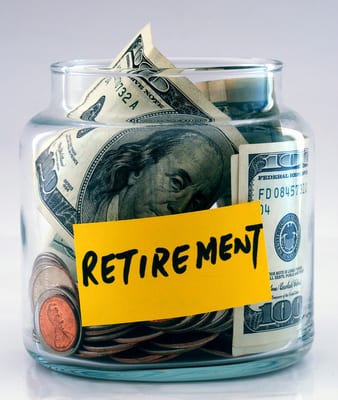
Saving For Retirement

We all want to save for retirement, but there never seems to be enough money left over to save.  Does this sound familiar?

The first rule of saving for retirement is, if you are offered free money take it. If your employer sponsored retirement plan offers you matching funds, take it. Contributing to a retirement plan through your paycheck is a great way to get started on the path of regular automatic saving. The earlier you start this habit the better off you will become. On the other side if you haven’t done this, it’s never too late to start now. In this case, free money is a good thing

Next you want to manage your debt. Debt is the enemy to your budget, so you want to avoid it at all cost. I am not saying don’t borrow or use credit, what I am saying is to use it wisely. Don’t become a slave to your debt and that you live paycheck to paycheck trying to keep up with your debt payments.

Charge wisely and only amounts that you can pay off easily. If you find yourself with an emergency and you have to borrow money, evaluate your options and make the choice that is best for you and your budget. Pay back the debt as quickly as possible to avoid as much of the finance / interest charges as possible.

Lastly, gratification – are you someone who needs instant gratification? Do you buy without a payback plan? Look at the food cost (groceries, dining out, take out etc.), shopping, memberships, entertainment etc. These are the expenses, that where the instant gratification that can harm your budget. These are the first defense against the leaks in your budget. Plug those holes to have more money for your retirement.

Think about your finances then make a plan to implement these strategies one by one.  Once you master one, start the next.  Remember that your finances will not change overnight, be patient and remember it takes time.

Your Emergency Savings Account

Emergency Savings AccountWhat’s your emergency savings account look like? Suze Orman suggests that you have eight months of income in your emergency savings. Dave Ramsey and Jean Chatzky both say 3 to 6 months. Hello Wallet suggest that you think of emergency saving in three ways – minor emergencies, major emergencies and job loss. Bottom line, you need an emergency savings account.

As with any goal, start with a plan – then automate it. When we started our emergency savings, our goal was to save $1,000. That would get us through the unexpected small expense. We started by saving $20 per week to reach that $1,000 goal in one year.

Once you accomplish your goal, I would like you to about your next savings goal. Sometimes unexpected emergencies cost more than you expect, especially if you are a homeowner. I have always thought that the major repair emergency fund should be in the $5,000 range. So then we started on this goal.  $100 a week gets you to $5,000 in a year. We divided this between both our paychecks. My husband gets paid weekly so he contributes $50 each week. I get paid every other week, so I put in $100. We then have achieved this goal of $5,000 in a year.

Remember, this is not a save for one year and done type of thing. You may need to use this money, so you need to replace what you use. You can never have too much money saved for the what if’s of life.

Different Types of Refinancing

We’ve all heard the word “refinance”, but what typically comes to mind is mortgages. Yes, you are correct. It also can apply to other areas of your finances such as car loans, student loans and credit cards. 

As with any borrowing, you want to pay off the debt as quickly as possible. But sometime you cannot afford to purchase a car with cash, so you take a car loan. You may want to look into refinancing your car loan if you can get better terms – lower interest rate.

For student loans lower interest rate is probably not the answer. You may have several loans and several payments. It might be easier for you to keep track of and have only one payment per month, if you consolidate. Check out your options to determine if this is right for you.

Credit cards are a good example. You may be payoff debt and it may seem like it takes forever. It could if you have high interest rates. Refinancing a credit card balance to a lower or zero percent interest rate will help you pay back what you owe quicker and pay less in finance charges.

As with any financial transaction, do your research and compare all terms and conditions to see if this is the right move for you and your finances at this point in your life.

Making Budget Choices

You know that I think everyone should track their income and expenses to really know where they stand. We personally do this a few months of the year.  But when I discuss this with others, I sense a resistance – maybe it’s too complicate, a time issue – I don’t know. So I am going to discuss budgeting from a different angle.

These are the things that we have chosen to give up, don’t have or do it ourselves – it’s our choice.

·         No data plan on our cell phones – just calling and texting

·         Driving older cars – they are 1995 and 2006

·         Home maintenance – we do our own yard work, snow removal, house cleaning, etc

·         Trash – we take our trash and recycle to the dump ourselves

·         Personal care – I cut my husband’s hair and I stretch the time between haircuts. I do my own pedicures, etc.

All these are the choices we have made for our lives. These choices let us travel. We have been to most of the Caribbean, a good part of Europe and more. We are able to take yearly vacations all because of the choices we make day in and day out to do with less in our daily budget.

Budgeting is about choices – where you chose to spend or not spend your money. Everyone is different and has different values / priorities and will make different choices about what they do with their money. I wanted you to see how the money works in our household. Now you can see what we don’t do that lets us do more of the things we want to do.

Paper or Plastic?

We are not talking about the grocery store. Paper or plastic is how you chose to pay for your purchases – paper (cash) or plastic (debit or credit). The choice may seem simple but there are benefits and drawbacks to each.

Here are some pretty common situations to think about:

·       You have to make a large unexpected purchase now and don’t have to cash to pay it all off in one month

·         You are purchasing an electronic item

·         You are going out to dinner

·         You are shopping for clothing

These are everyday situations that come up in our lives and this guide will give you some pros and cons to each method of payment. Yes, you want the least expensive way, but sometimes there are benefits to one choice versus the other.

You are probably going to use all three at certain times. Being aware of what the pros and cons are will help you make the choice that is best for you each and every time.

Here’s what I did after breaking my new tablet

20160115-tablet

For those of you that were not aware, this summer I purchase a new Microsoft Surface Pro – a 2-in-1 tablet that can be used as a laptop… only to have the screen damaged when we were hit by turbulence on an inter-island flight.  🙁

Since it was really new, I wanted to see if it was covered by someone other than me.

First, I filed a claim with the airline.  I found out that carry-on luggage is not covered by the airline. Ugh!

Next, my homeowner’s insurance would probably cover it but we have a large deductible, so that wasn’t the answer for me.

Lastly, I filed a claim with the credit card company.  I had used my MasterCard, so I was covered by an Extended Warranty which doubles the warranty period.  But that didn’t work because this type of damage isn’t covered under warranty.

However, MasterCard does offer Purchase Assurance for 90 days from the date of purchase.

I wasn’t sure how close I was to the 90 days, so I initiated the claim from Hawaii to be safe and completed the paperwork when we returned home.  Good thing, because it happened at 86 days. This is one of the many benefits of using a credit card to make a purchase.

So, I was safe right? Wrong. Unfortunately for me, I wasn’t covered because I purchase a refurbished item.  It was a hard and expensive lesson to learn that refurbished items are not covered by the credit card protection from MasterCard.  The financial industry is ever changing and you must always read the fine print.

In the end, I found out that Microsoft has a replacement policy so I was able to purchase a new tablet for substantially less than full retail price.  The people at the Microsoft store were wonderful.  Now I have my new laptop /tablet and am ready to go – this time with a new shatter proof case!

Get your first report for 2016

20160108-CreditReport

This month use Experian

Hello, it’s Jill again, reminding you to get your New Year started off right.

How to Order Your Credit Report

The only authorized source for your report is AnnualCreditReport.com. You won’t be charged and they won’t force you to sign up for “credit monitoring”. It’s yours to review by law. Learn more.

  1. Select your state, then click Request Report.
  2. Fill out your information, then click Continue.
  3. When it asks you to select a service, select Experian.

Not comfortable ordering online? There are other ways to order your report:

  • Mail your postal order by downloading the form at AnnualCreditReport.com
  • Call in your order at 1-877-322-8228

What should you do with your report?

  • Review it for accuracy!
  • Follow the instructions to correct any errors.
  • And, always remember to keep copies for your records.

Were you hoping for your credit score instead?

Try CreditKarma.com. It doesn’t give you a FICO score, but it comes close by providing scores from TransUnion and VantageScore. And, there’s no charge for you. CreditKarma funds their service through website advertising.

It’s so nice to start the year with a clean slate!

P.S. I’ll send you another reminder in May so you can enjoy your summer.

Happy New Year!

20160101-NewYear


You’ll be facing new choices this year. New purchases, opportunities to invest in new savings plans, whether or not to travel. Maybe you’re thinking of making an addition to your family, retiring, or moving to a new home.

I’ll be there for you. Use this newsletter and my website as a resource when you’re researching the smartest choices for your money.

Visit me at JillRussoFoster.com and put your topic in the search field or email me at jill@jillrussofoster.com

A new look for the newsletter

It will be called “Money Choices” and will be in a phone-friendly format. Here’s the new logo: Watch for it on January 15th.

MC-LOGO-1230

Happy Holidays

20151218-squirrel


A Meaningful Life

20151204-Feature

One of the last classes I took for my college degree was Senior Thesis.  The theme for the class was “A Meaningful Life”.  I did quite a bit of reading and wrote self-reflection papers on where I am today and where I want to be.  One of the big take-a-ways, was to live in the prelist month, stay in the present moment and treasure that instead of looking ahead in anticipation or looking back at the memories. I read Cheryl Richardson’s The Art of Extreme Self-Care while away and learned that no matter how busy life becomes, I need to make time for me. With that said, we are blessed to have family and friends in our lives and very fortunate to be able to travel to spend time with them.

One of the things that I will be doing over the holidays is to take time to reflect back on my 2015 goals to see how I did.  Then I will assess where I am today where I want to be tomorrow.  Yes, I always want to accomplish a lot and I have to remind myself to slow down and enjoy the present.

One of the things I do every year during my goal setting time is to create a vision board to actually see my life in pictures.  This helps me to have a visual reminder for what I want to achieve.

What do you want to accomplish in 2016?  Let me know your personal financial goals, so that I may be able to help you achieve them.

  • « Previous Page
  • 1
  • …
  • 46
  • 47
  • 48
  • 49
  • 50
  • …
  • 83
  • Next Page »
  • Facebook
  • LinkedIn
  • Pinterest
  • Twitter
  • YouTube

Contact Jill:

Email: jrussofoster@gmail.com or use this form.

Looking for something?

Follow Jill Russo Foster’s board Money on Pinterest.

Copyright © 2026 Jill Russo Foster