• Home
  • Products
    • 111 Ways to Save
    • Thrive in Five: Take Charge of Your Finances In 5 Minutes A Day
    • Cash, Credit, and Your Finances: The Teen Years
  • Resources
  • Speaker Info
    • Adult
    • School Age
    • Speaking Engagements
  • About Jill Russo Foster
  • Press/Media Kit
    • Full Media Kit
    • Bio
    • Photos
    • TV Appearances
    • Print Appearances
    • Radio / Podcast Appearances
    • Speaking Engagements
    • Press Releases
  • Contact Jill

Jill Russo Foster

Tips for Successful Personal Finances

  • Events
  • Every Day Finances
    • Banking
    • Budget Planning
    • Family Finances
    • Personal Finance
    • Reducing Expenses
    • Shopping Tips
    • Teenagers and Money
  • Protecting Your Home
    • Disaster Preparedness
    • Energy Efficiency
  • Tax Tips
    • Charitable Giving
  • Manage Your Credit & Identity
    • Debt Management
    • Mortgage Tips
    • Get Great Credit
      • Loans
      • Credit Card Act of 2009
      • Credit Management
      • Credit Report
      • Credit Report Reminder
    • Identity Theft & Fraud
      • Identity Theft
      • Fraud Alert
  • Organization & Planning
    • Organizing Your Space
    • Organizing Your Time
    • Vacation Planning
      • Travel Tips
    • Plan for the Future
      • Financial Goals
      • Marriage and Finances
      • Retirement Planning
You are here: Home / Archives for Organization & Planning

What Does Your Cruise Include?

 screen-shot-2016-11-28-at-7-49-03-am

Are you thinking about cruising and not sure if it’s for you or not? Here are some tips on what to do and what not to do and how to save tons of money on your vacation.

A cruise can be like an all-inclusive vacation, but not exactly. While most of the cruise is included, not everything is included in the price.

Included

Not Included

Accommodations – room, housekeeping, TV, some in room movies

Mini Bar / Pay Movies

Most food – Dining room, Buffet, Pizza, Ice Cream

Specialty Dining Restaurants, Specialty Ice Cream

Beverages – Non-Carbonated Drinks, Coffee / Tea, Juice, Water

Soda, Alcohol, Specialty Coffee, Bottled Water

Entertainment – Movies, Miniature Golf, Ice Skating, Ping Pong, Swimming, Water Park, Rock Climbing, Ice Skating, Rollerblading, Games, Live Shows, Comedy Venues, Live Music and More

Shore Excursions – when off the ship with the cruise line on an activity, tour, etc.

Casino, Video Arcade, Golf Simulator, On-Board Shopping

Fitness, Gym, Some Fitness Classes, Jogging / Walking Track, Pools, Hot Tubs

Some Exercise Classes, Personal Training


Personal Care – Salon, Massage etc.


Internet, Ship to Shore Phone Calls, Your cell phone

Gratuities to restaurant staff and cabin steward (although this is a separate charge when booking)

Additional Gratuities, Tips for crew members


Dry Cleaning / Laundry (some ships have washers and driers available)

Motion Sickness / Norovirus Treatments

Medical / Doctors Services

So how do you avoid or minimize your costs? 

There is so much food available either in the dining room and/or buffet most hours of the day (and night), there is no reason that we find we need to pay for additional foods. Hungry at 11 pm – go to the 24 hour pizza and salad area. Don’t want to leave your stateroom – order food from room service (it’s free, between 5 am and midnight). Still hungry check out the midnight snacks.

Plan ahead for what to do on shore – we do lots of things for free or low cost and do not go through the cruise line. Do your research and see what options are available. We took a great free walking tour of Valencia, Spain. All it cost us was a tip for the guide. You have to be aware of the time. When you are on your own, you could miss the ship sailing if you don’t pay attention to the time. One note, make sure if you book something on your own and the ships misses the port (weather related), that you will get a refund.

Some cruise lines will let you bring limited quantities of non-alcoholic beverages on board. Check with your cruise line before you cruise. We have flown to the cruise and stopped at the store to pick up bottled water and soda on the way to the pier. If they don’t, you can send yourself a gift (bottled water is less expensive to give yourself a case vs. buying as you go at the bar).

Alcohol is a big money maker for the cruise line. You need to determine how much you intend to drink.  Check out the packages to save money. If you don’t purchase the package, here are few tips – if you don’t intend to take home the souvenir glass – don’t purchase a drink in this glass.  Look for events with free alcohol – champagne art auctions, captain’s receptions, past guest parties and more offer limited free drinks.

Cell phone and internet service – it can be expensive on board. We have always found free internet in port when we wanted to check in.  Otherwise, purchase in advance for discounts. I did this when I was taking an online college class and needed to post daily to the discussion. 

The above is based on our experience on Carnival and Royal Caribbean, other cruise lines can have different policies and costs. Do your research ahead of time, so that you can understand the costs before you incur the charge. This is not a surprise you want to incur as your vacation winds down. Happy Travels!

Save

Save

Save

Save

Holiday Tipping

The holidays are coming! The holidays are coming! You probably know this and the retail stores are starting the holidays off during the summer. From Labor Day weekend, I see the holidays all over the place in retail stores. I’m thinking the beach and heat and they are thinking December. While it’s not bad to plan ahead and be proactive, it’s too early for me, but it’s never too early to think about your budget.

Tipping is always something that comes up around this time of year. Here are my thoughts and what we do.

First, we don’t wait for the holidays. In my opinion, good service doesn’t have to wait until the end of the year. If someone goes out of their way or does an exceptional job, then by all means tip them.  A while back we bought dining room chairs and the person in the store took the time to go out of his way. That deserved a tip then and there.

Second, give what you can afford. While it’s nice to give cash and to be able to give to everyone, that may not work for your budget. You can thank people verbally and express your gratitude with a conversation, special note in a card, contact the company or supervisor and express the great service you received, instead of cash. I have made calls to the airline to express how grateful we were for a particular person and the excellent service we received. Rarely do companies get calls like this and they can seem shocked at the call.

This is my plan of attack. Create a list people in your life and here are some examples:

Mail Carrier / Package Delivery
Personal Care (Hair, Nails, Massage)
Child & Elder Care
Teachers
House Cleaner / Lawn Care / Snow Removal Care
Pet People (Groomers, Walkers etc.)
Doorman / Maintenance Workers
Assistants / Key Employees

Then make a plan. If you were to tip everyone in one week, you would break the bank. I like to start after Thanksgiving and end this by New Year. Now if you have decided on an actual tip, it can take the format of the cash or possibly a cash gift card, unless you know them well enough to pick a specific merchant’s general gift card. Spreading out the tipping, helps my budget. Plus, I like to do this in person. So when I have a service done, that’s the time I tip, and again throughout the year helps my budget as well.

Finally for cash tips, make a trip to the bank and get nice new crisp bills and have thank you or blank note cards. People who get many tips need to know who they received it from, so a short thoughtful note handwritten in the card works well. It always is so much nicer to give a tip with a good presentation. I feel that the recipient thinks you took the time to think about them versus handing them crumpled bills from your wallet.

Not sure how much to give? That’s entirely up to you. There are many guides on the internet to assist you, but ultimately it’s your choice. Make your plan now so that you check one thing off your holiday to do list.

Save

The Importance of Having an Emergency Fund

In praise of emergency funds! I can’t say enough about having an emergency fund to use in times of an emergency, as well as having the protection of insurance. We had a big life emergency this time, and it could have been much worse.

While Dave and I were out of the house for about an hour and a half, an emergency struck our house. A feeder line for the toilet broke and we came back to a small geyser. Not only was the bathroom flooded, the water flowed into the master bedroom and then down into the basement. Ugh! You can imagine the damage this has caused. But it could have been much worse.

So this is how our afternoon went:

*  Shut off the water – we had individual shutoffs installed all over the house
*  Next the clean-up began – towels, wet vacuums and more
*  Contacted the insurance company to file a claim. This is the first homeowners claim we ever filed.
*  Started the removal of the damaged stuff, and this was hard without Dave being able to move things.
*  The insurance company sent out Service Master to remediate the damage. They moved the heavy furniture, installed the industrial fans and dehumidifiers to lessen the damage
*   Next day we had to replace the modem, as we lost phone and internet service. It’s difficult to make multiple calls with only a cell phone.
*  The drying out stage lasted for days. It included the carpets, hardwood floors, ceramic tiles, sheet rock, furniture and that’s only the big stuff!

Now we are at the rebuilding stage, with the contractors giving us estimates for replacing floors, hard wood and tile, sheet rocking the portion of the walls that were cut away with water damage, painting of rooms, replacing furniture and items that were damaged and more.

Living in a disorganized home as two rooms of furniture and personal items had to be moved out of the rooms and the basement, made our home somewhat of an obstacle course for quite a few weeks. Hopefully by the holidays, we can be back to our organized house.

Save

Save

Relationships & Finances

screen-shot-2016-10-03-at-5-21-44-am

Finances don’t have to be difficult, but there are things you need to think about when you get into a relationship. You have a way of handling your finances and it’s worked great for you and you like the system.Your partner has a way of handling their finances and it works for them. Seems simple enough. Then you find out that you do things totally opposite. Now what?

You have to come to a compromise that both of you are comfortable with. First, start by really listening to your partner and putting yourself in their shoes. It’s hard to do, but it’s really important.  Listen to their reasoning and why they do what they do. Then have the same conversation with the roles reversed. Now come up with a negotiated and agreed upon game plan.

This will take multiple conversations and time. If you both agree to the plan, you have conquered the first hurdle.  Here are some of the questions you need to come to an agreement on:

$  What are our goals / what do we want to achieve?
$  How do we get there?
$  Who is going to be responsible for what? Think bill paying, savings, spending, bank reconciliation, credit, debt, investments, retirement, and more.

I have seen this work in many different ways.  Here are a few examples:

They keep everything separate. Each person keeps their own income in their own bank accounts.They have agreed to who pays for what bills. Each handles their own investments and goals.

One person handles the big/long term items of the finances and the other handles the day to day finances. So long term is for the future – investments, retirement, savings, college, home buying, etc. and short term are more of the daily finances – bill paying, household purchases, routine items that are in the day to day budget.

The do everything together philosophy. All happens with a meeting of the minds and each person is involved in all aspects of the family finances.

No matter what you choose and how you choose to handle your finances, it all starts with communication and a game plan. All people should know what is going on, where to find the information and how to access it. After my mother died, my father had a hard time figuring out the finances, as he wasn’t involved with them.

Make your joint choices and know that you have the option of trying and changing until you find what is right for the both of you.


Save

Save

Save

Vacation Insurance

With vacation season underway, are you covered if something happens?

According to Wallet Hub, 1 in 6 Americans have an illness or natural disaster happen to them. Are you covered so that you don’t lose you hard earned money? Of these 1 in 6, only 22% have insurance to cover their travel costs / expenses.

While some credit cards offer you coverage for lost or delayed luggage, missed connections, trip cancellations and even death sometimes. All credit cards are different and you need to check your individual card for what your offers you. If you are covered, they offer you reimbursements – that means that you pay upfront. Do you have that money? And they come with restrictions. Remember my Microsoft Surface Pro experience from last fall?

We have one credit card that we always use to rent a car. It gives us coverage so that we can decline the optional rental car company insurances and feel comfortable. We have another credit card that gives us the travel protection of lost or delayed luggage, missed connections, etc. We have done the research for us and you should too.

You should think about what you may need and find out if you are covered with the credit card you already have. Typically, if you don’t charge the trip to that specific credit card, you don’t have the coverage. Then check with your personal insurance (think auto insurance for rental car coverage, home owners / renter for loss of property, etc.). Then look into travel insurance, if you need or want more or additional coverage.

You should do this process for your health insurance as well. Most insurance policies don’t cover you when you travel outside the US. All this pre-planning could offer you the needed assistance in your time of need. So do your research and make the choices that are right for you.

Happy Travels!

Save

Save

Save

Low Or No Cost Summer Fun!

As you know, Dave has been home for three months unpaid, with his shoulder replacement and my position ended with Norwalk Community College. It’s summer time, there is so much we wanted to do and we need to do this on the frugal side.

Summer is perfect here in CT. We have access to great beaches, parks and entertainment. So this is the place we want to be.

So this is what we have done so far. 

 We have gone to the Stamford Museum for free, the Connecticut Beardsley Zoo for $5 each (66% discount over the regular pricing) and walked at the Audubon Center (free). All this thanks to our local library which offers free or discounted admission to many local attractions. That’s a great budget saver for us and could be for you too. 

One thing we crossed off our bucket list was the Essex Steam Train and Riverboat. On one of those hot days, we took the train ride from the shoreline into CT, then took the Riverboat from Deep River, CT and back on the train to were we began. It was a great day trip and a surprisingly cool way to spend a half day.

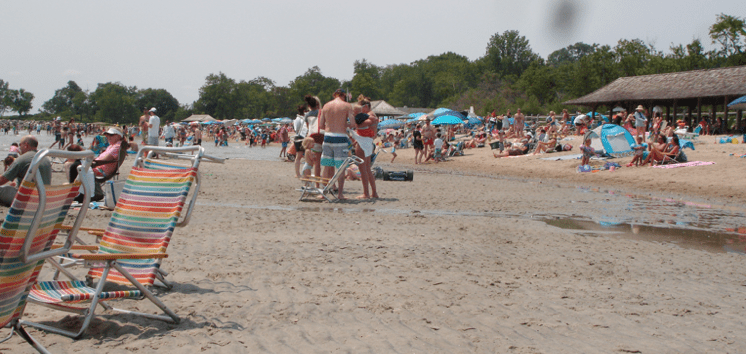
We have gone to our local beaches. One of our beaches (an island) requires a 20 minute ferry ride and we brought a picnic to the island. It was a beautiful day so we rode the ferry an extra trip – love the sunshine and the salt water! This is a minimal cost as a resident.

One of my favorite things to do in the summer months, is to watch a movie in the park. Our town, as well as other towns in the area, do this. We bring a picnic dinner or take out, sometimes the dog and watch a movie under the stars. 

We have dinners outside at home with the vegetables from our garden. There is nothing better than growing your own, picking it and having it right away – just delicious. Salad is always from the garden. Our tomatoes are starting to turn red and the string beans are there for the picking. All for the minimum cost of a packet of organic seeds.

We are exploring our area and doing some of the stay-cation things in town and across the state.  With more nice weather weekends ahead, there is so much more on our list of places to explore so stay tuned.  What are you doing this summer? 

Save

Financial Independence Part 3

We’ve all heard the saying “Don’t keep up with the Jones”. What does it really mean? You are fine with your sofa and all is well with your family. Then your friends gets this really nice brand new sofa that is gorgeous. Then you start to think, my sofa is older, starting to look its age, maybe had a stain in the corner, you start to rationalize that you need a new sofa too.

Just because someone else gets something new, you don’t necessarily need that too. That’s keeping up with the Jones’. All of these steps are hard to do. You have friends and family showing you their new things, marketing showing you the bright shiny items that you love to own, but do you need it?

Needs and wants are a hard subject to learn. You have to come to some balance of what you want and what you can afford. So in my example above, you can do some thinking – there are choices in etween the current sofa and the new sofa:

  •         Current sofa
  •         Clean the sofa
  •         Buy a slip cover
  •         Reupholster the sofa
  •         Buy a second hand sofa
  •         Buy a new sofa

See how many choices that I just wrote out between the current sofa and the cost of a new sofa.  Some of these in between steps may work better with your budget. You don’t always need to have the latest, greatest new item.

If financial independence is something that you aspire to, then you need to work on all three of these steps, to get your finances in order once and for all.

Save

Financial Independence Part 2

This is part 2 of 3 of obtaining financial independence.

Spending less than you earn, sounds easy – but is it?  The basic principle is if you earn $100 then you need to spend less than $100.  That’s the general rule. But there are times in our lives that this isn’t possible. When you are just out of school and your rent, utilities and student loans are almost your whole paycheck, you may experience times when you are not working – in between jobs, can’t work for medical issues etc., these make spending less than you earn a challenge.

If you have been reading this newsletter, you know that my husband had been home from work after shoulder surgery and is not getting paid while he is recovering. So what is our household supposed to do to spend less than we earn? The answer for us is to reduce our expenses and to fund the shortfall with our savings. Luckily this was a planned surgery, so we had time to plan ahead to save. But this may not be possible for everyone. First, you have to have a savings to fall back on to get through whatever life throws at you.

Spending less than you earn is critical to financial independence, as you have to save on a regular basis, putting a regular amount from each and every paycheck into savings first – pay yourself first.

Here’s how to start:

  •       Take a calendar out and mark your paydays.
  •       Determine the amount that you want to save. It’s okay to start small ($10 a week) and then increase often.
  •       Set up automatic system. There are two ways to do this – with direct deposit have your paycheck split by your employers so that the amount you want to save is directly taken from paycheck and deposited to your saving.The other way is to set it up with online banking and have a transfer from your checking to your savings.

There are some suggestions to making this work. Make sure not to link your savings account to your ATM card. You may want to have this savings account in another bank or credit union – not where your checking is located. You want to have access if you need the money but not have easy access to use if when you just want something. It’s too easy to transfer money without thinking.

So for that $100 you earn, you will want to save money first – pay yourself first, then live off the rest. The rest is what you pay your bills with, shop for your necessities and the money to have fun with. Yes, that’s a lot, but I know you can make it work. You want to be conscious of what and where you spend your money, so that you can make choices. Do you want to purchase that now or have that money saved for later? The choice is yours.

Save

Financial Independence Part 1

In honor of Independent Day/Fourth of July, I want to talk about many people’s ultimate goal of financial independence. According to Wikipedia, financial independence is described as “generally used to describe the state of having sufficient personal wealth to live, without having to work actively for basic necessities. For financially independent people, their assets generate income that is greater than their expenses”.

Yes, we all probably want this and therein lies the problem. How do we attain this?

There are some generally agreed upon principles that are good practices that we all should attain to:

  • Avoid consumer debt
  • Spend less than you earn/Pay yourself first (save)
  • Don’t keep up with the Jones’

These are all great suggestions and work really well, but what if you need to work on some of these steps. In my opinion it all goes back to budgeting. Budgeting is the road map of your finances. You can see where your money is going and then make the necessary steps to eliminate consumer debt, reduce your spending, save by paying yourself first and break your habit of keeping up with the Jones’. It may sound simple but it isn’t. So with this issue and the next three I will tackle these issues.

Today, let’s look at avoiding consumer debt. This can be difficult to attain. But on the other hand, this is so important – too important not to strive for.

There have been times in my life that I have had more debt than I would like to admit. Yes, this happens to me too. In my opinion, there are two steps to start on the path to being debt free.  First, you have to stop creating debt. Yes, you heard me. You need to do whatever it takes to avoid adding more to the debt. With that said, you can’t put every extra penny towards your debt and not have an emergency fund. Otherwise, the next time an emergency happens and you don’t have a fund to fall back on, you will create more debt.

In May and June, my husband had surgery and was home from work for a month without pay. We only had about 6 weeks’ notice to plan for this. We got through this period with the help of the emergency fund and savings to cover the shortfall. This was the key to us being able to live and pay the bills.  Without the savings to fall back on, we would have had to use credit cards and create debt. So you can see how having an emergency savings plays a big part in getting rid of debt.

Back to the debt. Second, there are many ways to tackle this. Start by taking an honest look at your all your debt. Make a list including how much you owe, the minimum payment, interest rate, etc.  I understand this is hard, but it’s necessary.

Now make the plan. You can payoff the smallest debt first to eliminate one debt (gives you momentum). You can payoff the debt with the highest interest rate (saves you money). You can plan to get more money (bringing in more income) with many options to add to your payment.  Take some time to brainstorm what will work best for you and then put that plan into action.

You’ll need to stop creating additional debt and to create or increase your emergency fund. Next issue, I will discuss spending less than you earn/pay yourself first.

Save

Save

Save

Save

Our Travel Favorites

Our Fav orite Places

According to US News & World Report Travel here are their top 25 places to travel to. We’ve been to 11 of the places. Also, we were recently asked what our favorite place was and it got us thinking that we couldn’t just name one. So here is the list that we compiled. We like specific things about many places. So here’s our favorite list (so far) and this will change as we see more places around the world:

Favorite Pool – You know one of our favorite things are sun, beaches and pools, here are two pools we love – Aruba Marriott Surf Club’s Lazy River Pool and the Bahama’s Atlantis water slides.

Favorite Beach – Sometimes we just want to go somewhere and lie on the beach to relax without technology and here are our favorites.  Horseshoe Bay Beach – the gentle surf for being in the Atlantic Ocean. This is a must do anytime we are in Bermuda. On the other side of the country, you can’t beat Ka’anapali Beach, in Maui, Hawaii – just a relaxing experience with a tropical breeze (although a long flight for us).

Favorite European City – There is still much more to explore but our two favorites are London – lots of music history to be explored and easy to get around, a very walkable big city.  Barcelona, a great walking city with lots of history and on the Mediterranean. We still remember from almost 7 years ago, arriving at our hotel and seeing the Red Bull planes flying their obstacle course out our window.  What an unexpected thrill for Dave.

Favorite Public Transportation – St. Petersburg, Russia subway is so clean and it’s like traveling through and art gallery all underground – way underground (it’s the longest escalator we’ve ever been on). According to Wikipedia, the deepest station is over 280’. We also love the Hop On Hop Off Buses throughout Europe. It makes getting around cities really easy to go from one place to another even if there is a language barrier. We used them in Oslo, London, Tallin, Barcelona, and more.

Favorite Hotel – Hotel Arts in Barcelona – great ocean front hotel with excellent service and within walking distance from town and Las Ramblas (Main Street). Hyatt Regency Maui – terrific beachfront hotel that we spent our first anniversary at when it opened and my favorite penguins (Oreo and George) in the lobby.

Favorite Cruise Line – Royal Caribbean has itineraries all over the world with ships of all sizes and a great loyalty program that is easy to understand and you can move up the levels pretty easily. You know that we love those perks and benefits that comes with the reward programs.

Favorite Airline – American Airlines – hands down the best airline for us. They have excellent service and it’s easy to travel on award miles (we never had a time we couldn’t use our miles for where and when we wanted to go). The online shopping and dining rewards are so easy to use to earn miles and keep your accounts active. Our recent flight was delayed and they provided food and drinks to all for the inconvenience.

Favorite Restaurant – Flying Fishbone, Aruba (See Top Picture), you actual hang your shoes on a shoe tree as your table is actually in the ocean. Sonz Maui at Swan Court, a tranquil restaurant by the ocean.  Another great restaurant experience, was the restaurant in Tivoli Gardens in Copenhagen, Denmark. We had a great traditional Danish meal with our friends.

There are so many places we have been and it’s hard to just pick one, but this is partial list. It will change and be updated as we travel more, so keep reading my newsletter for updates.

  • « Previous Page
  • 1
  • …
  • 13
  • 14
  • 15
  • 16
  • 17
  • …
  • 25
  • Next Page »
  • Facebook
  • LinkedIn
  • Pinterest
  • Twitter
  • YouTube

Contact Jill:

Email: jrussofoster@gmail.com or use this form.

Looking for something?

Follow Jill Russo Foster’s board Money on Pinterest.

Copyright © 2026 Jill Russo Foster